State of AAC 2026
31 Mar 2026
What Happened Last Year in AAC?
Welcome to year three of our annual reporting on the world of AAC! AAC is tricky to keep track of, because news and events don't happen often enough to warrant a dedicated news feed, but things happen in enough different places that it can be hard to keep track of everything on your own.
Enter the State of AAC. We look backward and forward in an effort to see what's happening and what still needs to happen around AAC. This report is drawn from multiple sources, and includes participation from AAC users, families and specializits from around the country and around the world.
Pop Culture
 Following last year’s iconic AAC appearances, we saw some notable moments in 2025 as well. Paolo, a new character on the children’s show Carl the Collector, appeared, played by real-life AAC user Odin Frost, a non-speaking actor with autism and cerebral palsy.
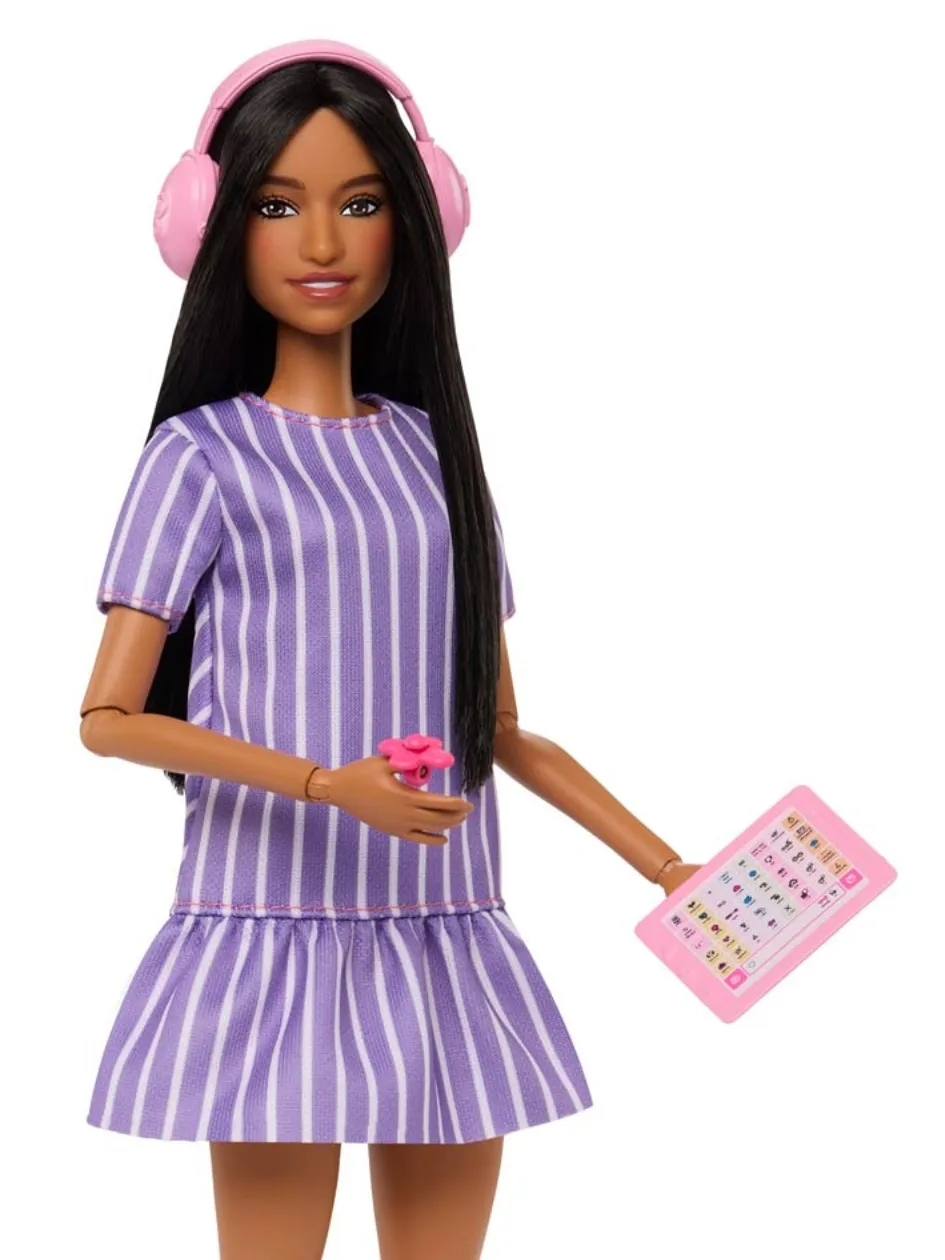 Mattel released a new Autistic Barbie doll, complete with high-tech AAC accessory. This is a win for representation not just for autism, but for AAC users in general as well. Autistic Barbie comes with headphones, a fidget, and a grid-based AAC app or device. Hopefullly Mattel will consider releasing these addons as bundle that can be purchased to use with any other Barbie dolls.
This year also saw the release of the “AAC Manifesto”, an AAC-user-led statement challenging the dominant narratives about the future of AAC. It includes important points about technological drawbacks, medical framing of disability, ownership of technology, and the importance of interdependence as a fundamental right.
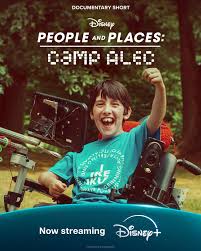
Landing on Disney+ with maybe not quite as big a splash as Out of My Mind, but still important, is the Camp Alec coverage as part of the documentary series People and Places. Camp Alec is a sleepaway camp for non-speaking AAC users, and the documentary highlights the capacity of participants to communicate, learn and assert themselves.
Neil Daniher, a form AFL play and coach who has ALS and uses AAC, was named Australian of the Year 2025. Neil has MND, and has helped collect over $115M in funding for MND research.
Spelling2Communicate (S2C) continues to be a topic of heated discussion. More S2C providers are appearing around the country, and despite the ongoing debate around the approach, more families are defending its use in online communities. Whether you agree with the practice or not, it is clear that families feel a need unmet by traditional practitioners and strategies.

AAC Tools
The landscape of AAC tools did see some minor changes in 2025. Flexspeak hung around, Weave Chat continued to expand its language offerings and started a subscription model for web access. Avaz got bought by PRC-Saltillo. AbleNet continues to be a lightning rod due to bypassing vendor agreements, pushy sales tactics, but also faster turnaround for insurance funding.
The breakdown of AAC apps by popularity didn't see much of a change, other than TD Snap dropping a few places (possibly due to its pricing change to a subscription model).
 TouchChat
 LAMP
LAMP
 Proloquo2Go
 TD Snap
 Grid
Grid
 Weave Chat AAC
 Avaz
Avaz
 PODD
PODD
Additionally we ask which AAC apps people find most *impactful*, with the following results for this year.
TouchChat
LAMP
TD Snap
Proloquo2Go
Grid
 Proloquo
Avaz
Proloquo
Avaz
 FlexSpeak
Weave Chat AAC
FlexSpeak
Weave Chat AAC
AAC Vocabulary
AAC vocabularies don't have to be tied 1-1 to AAC apps. A lot of times that's still how it plays out, but our hope at OpenAAC continues to be that we can tease the two apart, and as a result provide more options and flexibility for AAC users. Here are the AAC vocabularies reported for this year's summary.
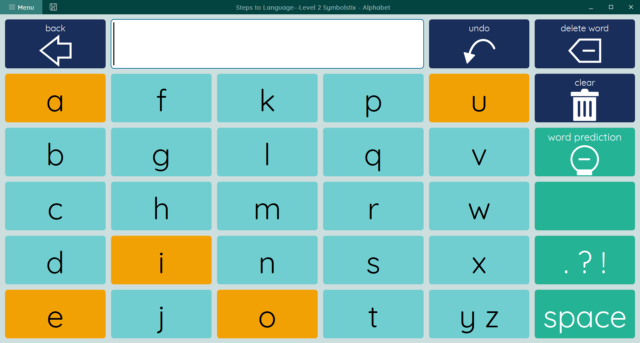
 WordPower
Nancy Inman’s popular sequenced vocabulary is available on many apps
WordPower
Nancy Inman’s popular sequenced vocabulary is available on many apps
 Words For Life
A motor-planning update to Unity is a popular 84-button vocabulary
Words For Life
A motor-planning update to Unity is a popular 84-button vocabulary
 TD Snap Motor Plan
TD Snap’s app has gained more fans since getting this new vocabulary
TD Snap Motor Plan
TD Snap’s app has gained more fans since getting this new vocabulary
 Proloquo2Go Crescendo
An updated vocabulary to keep the original app up with the times
TD Snap Core First
TD Snap’s original vocabaulary is less-popular, but still growing in awareness
Proloquo2Go Crescendo
An updated vocabulary to keep the original app up with the times
TD Snap Core First
TD Snap’s original vocabaulary is less-popular, but still growing in awareness
 Unity
The original combination-based vocabulary is still used often
PODD
The original pragmatic-style layout
Unity
The original combination-based vocabulary is still used often
PODD
The original pragmatic-style layout
 Super Core
Grid’s multi-grid-size contextual layout
Super Core
Grid’s multi-grid-size contextual layout
 Voco Chat
Grid’s pragmatic-style layout
Voco Chat
Grid’s pragmatic-style layout
 Crescendo Evolution
Proloquo’s new vocabulary for a new app, and training tools to go with it
Crescendo Evolution
Proloquo’s new vocabulary for a new app, and training tools to go with it
Please remember that while some vocabularies are app-specific, that is mainly because the app vendor has chosen to keep it that way. Most vocabularies don't actually have unique enough features that they couldn't be ported to other apps. Our hope is that, with time, the idea of porting vocabularies across apps will gain more widespread acceptance. This would truly be a boon for AAC users, who could then mix and match the app and vocabulary combination that worked best for them.
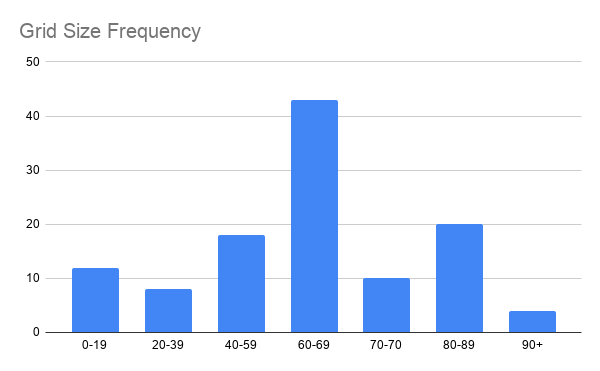
Many vocabularies are also offered in more than one grid size. Here's the most common grid sizes reported by our survey respondents. 60-ish-buttons is the sweet spot again this year, and the 84-button grid size is still favored next, but there were more 40-50-ish grids reported this year than before. It's important to choose a grid size that works best for each individual communicator, and we strongly encourage everyone to think hard before implementing a grid with fewer buttons, given the inherent limitations that come with them.
Up and Coming
If you're in the AAC business, listen up! Here are some of things people are asking for to improve AAC adoption and usage: Speech synthesis is more languages, faster access to eye gaze, more literacy support, longer device/app trials, better accountability through data tracking & reporting, better cases and keyguards, more words in default vocabularies, cross-compatiblity across apps/vendors, etc.
Some of the fun shiny stuff that would be great to add include support for singing, ambient noise volume adjustment,vocabularies for switch-based users, personalized symbols, and conversation-listening AI for response prediction.
Research Needs
When it comes to questions that need a better answer, here are some of the items that came up as needing more research: efficacy of vocabulary organization, barriers to funding, peer modeling efficacy, GLP support, actual data on S2C, alternative access approaches, barriers to literacy instruction, etc.
AAC Influencers
So many people are making a difference in the world of AAC -- advocates, trainers, educators, researchers.. We are grateful to everyone, whether they show up on this list or not, who is investing their energy to help communicators around the world gain a little more communicative freedom. Below are the names most frequently mentioned in our survey, listed alphabetically.
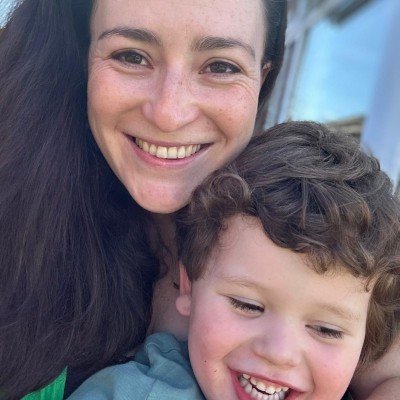 Laura Brown
Parent of AAC user calling for more AAC access and awareness
Laura Brown
Parent of AAC user calling for more AAC access and awareness
 Emily Diaz
SLP specializing in AAC and online resources to support practitioners and familys supporting AAC
Emily Diaz
SLP specializing in AAC and online resources to support practitioners and familys supporting AAC
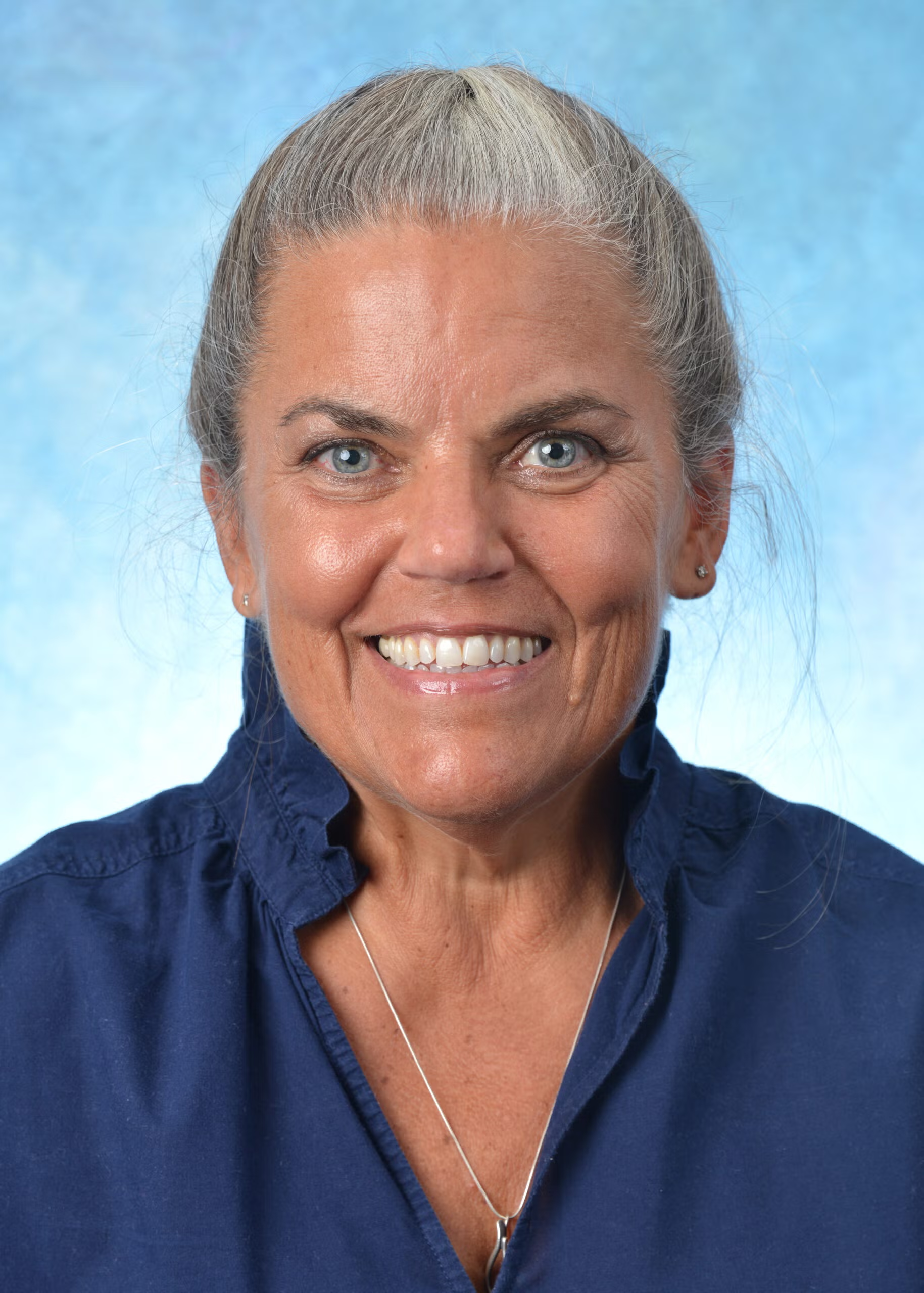 Karen Erickson
Researches and teaches on literacy importance and approaches for AAC users
Karen Erickson
Researches and teaches on literacy importance and approaches for AAC users
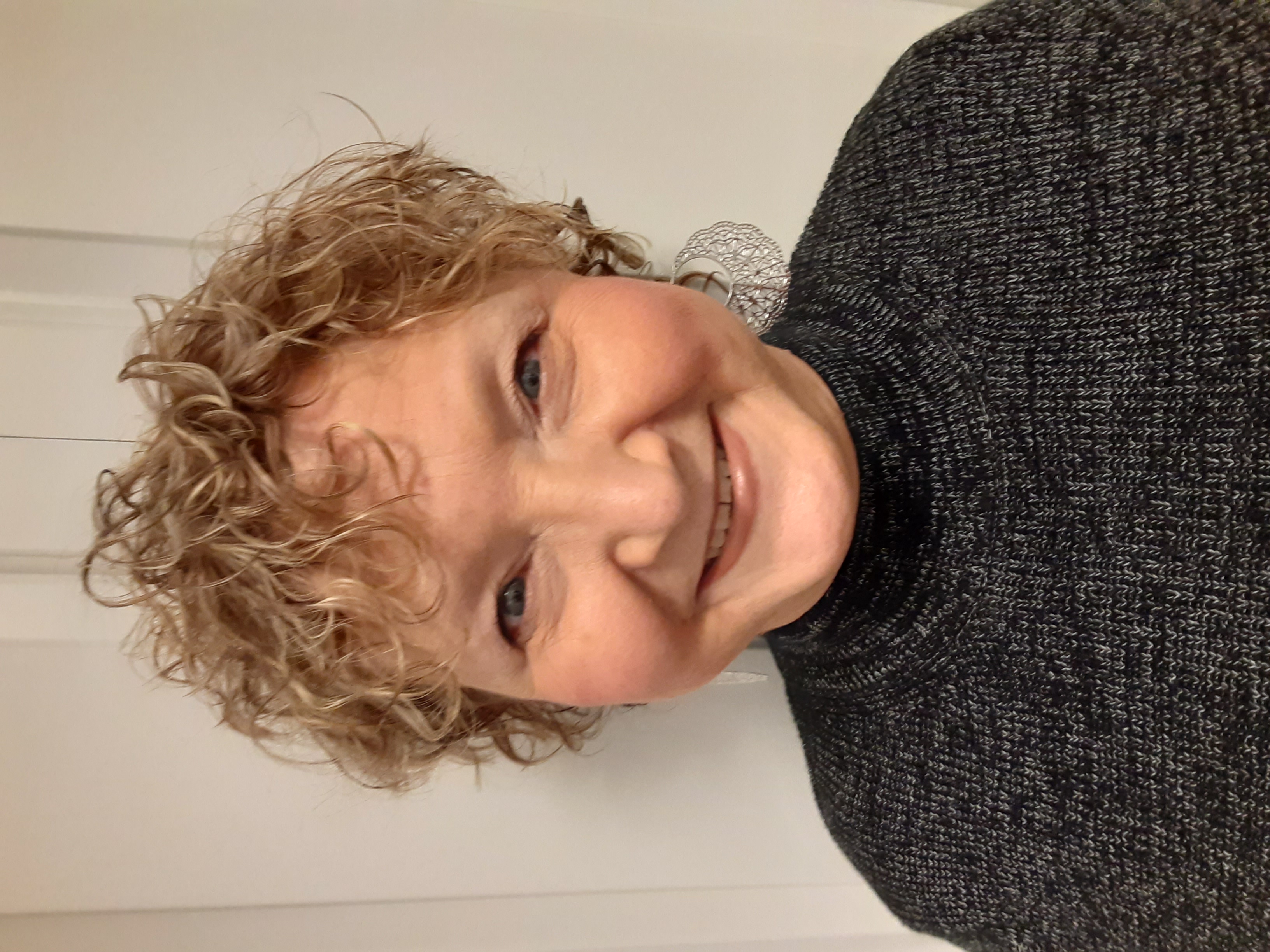 Kelly Fonner
Experienced AAC consultant & trainer helps just about everywhere
Kelly Fonner
Experienced AAC consultant & trainer helps just about everywhere
 Lauren Enders Gonzales
Compelling trainer of AAC strategies and leveraging online tools
Lauren Enders Gonzales
Compelling trainer of AAC strategies and leveraging online tools
 Krisa Howard
AAC user, mentor and advocate
Krisa Howard
AAC user, mentor and advocate
 Angela Moorad
Tracks most common AAC apps, reports on new features and how-tos
Angela Moorad
Tracks most common AAC apps, reports on new features and how-tos
 Caroline Musselwhite
AAC advocate, content creator and trainer emphasizes literacy
Caroline Musselwhite
AAC advocate, content creator and trainer emphasizes literacy
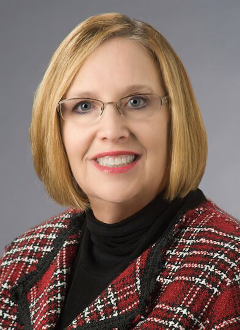 Gail van Tatenhove
Influential presenter and trainer with deep AAC experience
Gail van Tatenhove
Influential presenter and trainer with deep AAC experience
In Memoriam
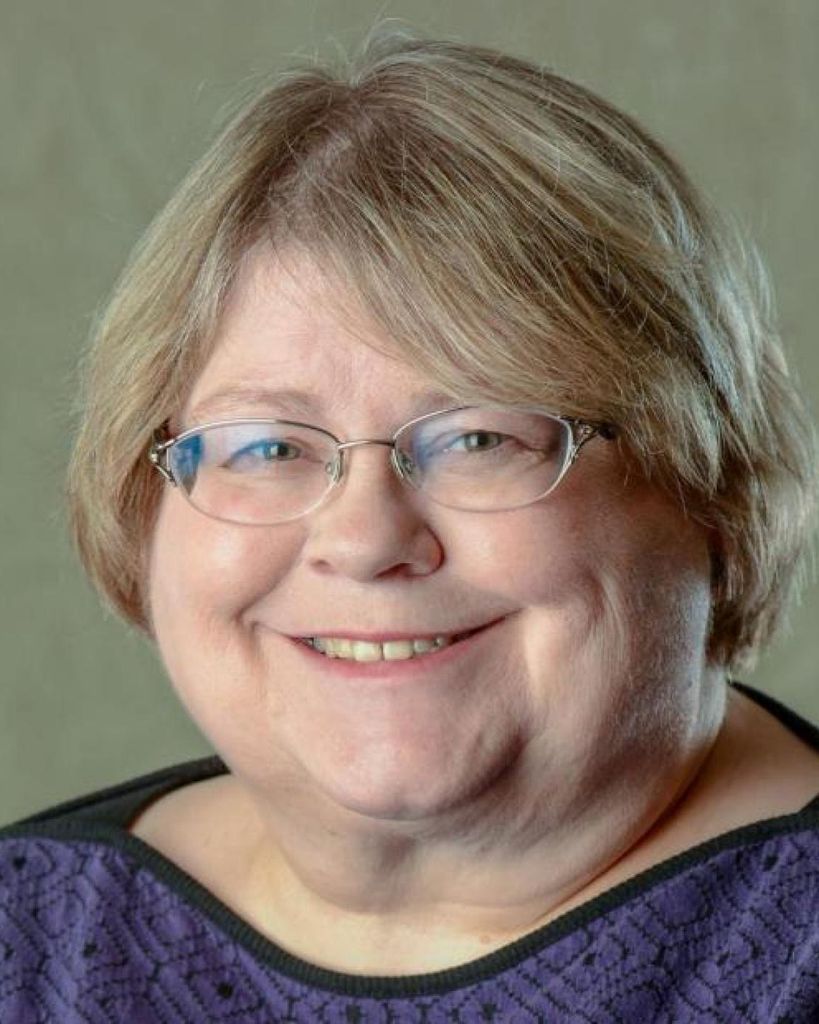
Mary Jo Cooley-Hidecker (1958-2025) served as the Director of the All About Communication (AAC) Lab; the long-term goal of her program of research was to improve family-centered, evidence-based practice in those with severe disabilities. Her specific research emphasis was on cerebral palsy, autism, hearing loss and Parkinson's disease. Her research interests included the relationship among effective treatment outcomes and individual and family factors, as well as the use of augmentative and alternative communication. She led the development and ongoing research on the Communication Function Classification System (CFCS) which has been translated into more than 20 languages. And she was part of the interdisciplinary research team developing the Autism Classification System of Functioning: Social Communication (ACSF:SC).

Alice Wong (1974–2025) was a pioneering disability justice activist, author, and founder of the Disability Visibility Project, who passed away at 51. She wrote sincerely, earnestly, confrontationally and unapologetically. #CripTheVote After becoming an Augmentative and Alternative Communication (AAC) user, she joined CommunicationFIRST, pushing for AAC users to own their narratives and bend traditional communication modes.
Caught in the Web
Where do you go to learn more about AAC? Many people don't have a quick answer for that -- so we asked those who do to share, and here's a collection of resources recommended by the AAC community!
 PrAACtical AAC
 The AAC Coach
 Stepping Into AAC
 AAC in the Cloud
 Talking with Tech
 OMazing Kids
 ASHA SIG12
 AAC for the SLP |
QIAT |
AAC through Motivate Model Move Out of the Way |
AAC for the SLP |
QIAT |
AAC through Motivate Model Move Out of the Way |
 thechildledslp |
spinningworldofautism |
beautifulspeechlife |
thechildledslp |
spinningworldofautism |
beautifulspeechlife |
 Talking with Tech |
AAC in the Cloud
Awe and Wonder
Talking with Tech |
AAC in the Cloud
Awe and Wonder

 Comprehensive Literacy for All
Trouble With a Capital T
 Unfortunately, we as a community are still seeing some old-school thinking and bad habits that we can’t quite shake. Community members reporting issues with people still using hand-over-hand strategies or requiring participation on AAC devices. Some people still refuse to accept AAC communication unless it’s done in full sentences, and some refuse to allow AAC use during literacy instruction. There are times when replacing core words with specific requests makes sense for the individual, but teams are reporting this coming up more often than it should. Finally, some AAC users are still having their communication devices taken away as a form of punishment. Please consider carefully before participating in any of these actions.
Assessments
Assessments are an important tool for consistent evaluation and assessment on individual needs and growth. While at times they are overemphasized, they can be helpful when taken in context using a collaborative approach. Each individual is unique, but the hard truth is that many areas do not have access to practitioners with enough AAC expertise, in which case AAC-specific assessment tools become even more important.
Here is a list of the most common assessment tools reported for 2025, sorted in order of frequency:
 DAGG-3
Free after registration - Dynamic AAC Goals Grid by Tobii-Dynavox
DAGG-3
Free after registration - Dynamic AAC Goals Grid by Tobii-Dynavox
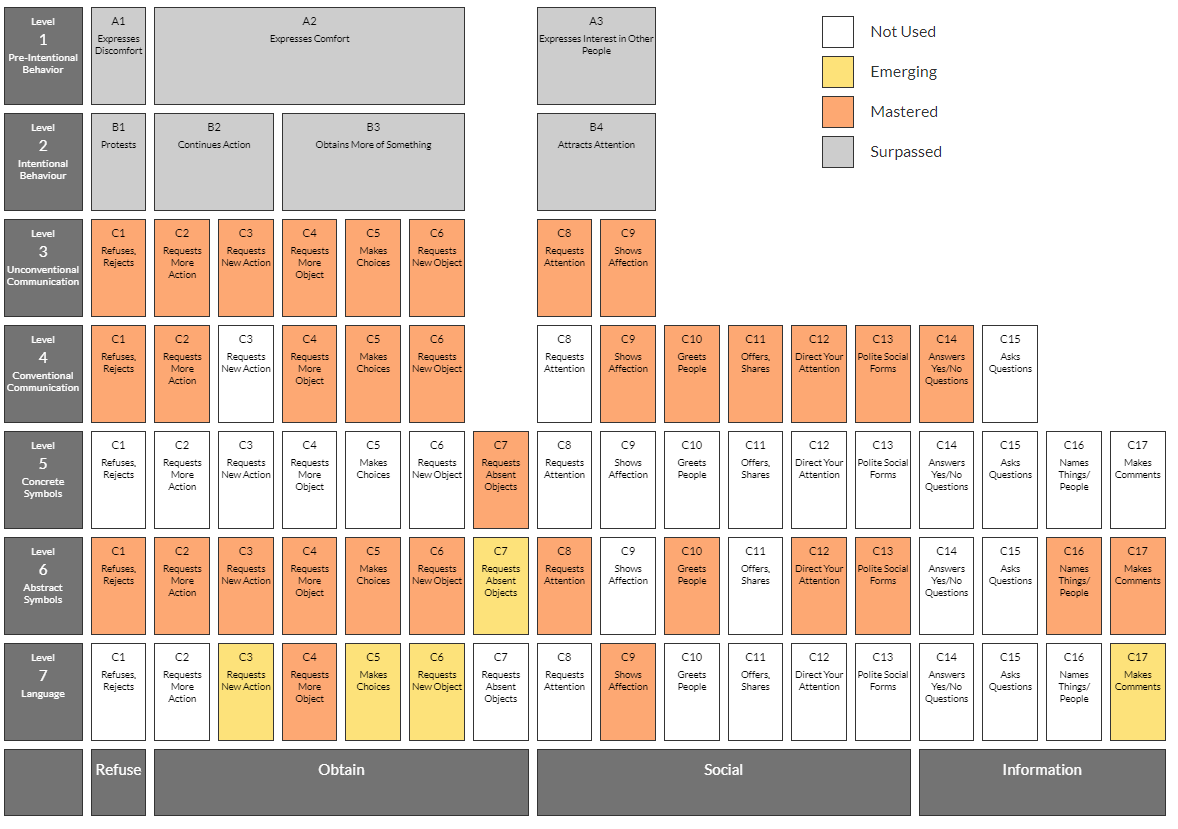 Communication Matrix
$5/use after 2 free - Non-profit tool for tracking levels of communication
Communication Matrix
$5/use after 2 free - Non-profit tool for tracking levels of communication
 FCP-R
Paid packet - Functional Communication Profile (Revised)
FCP-R
Paid packet - Functional Communication Profile (Revised)
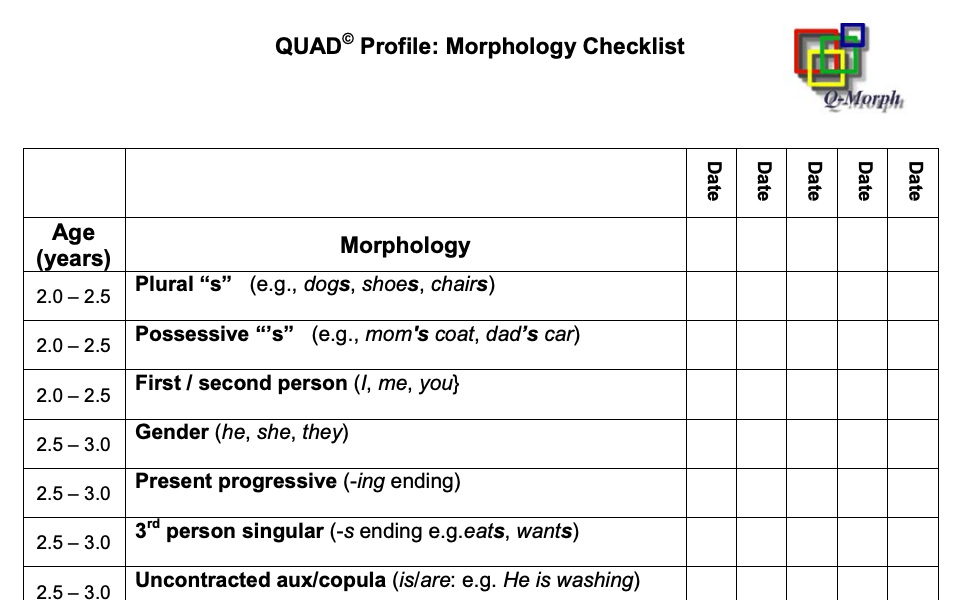 QUAD
Free - Quick AAC Developmental Profile by Russell Cross
QUAD
Free - Quick AAC Developmental Profile by Russell Cross
 Language sampling
Manually recording communicative attempts for later analysis
Language sampling
Manually recording communicative attempts for later analysis
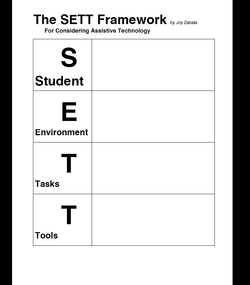 SETT
Free - Student, Environment, Tasks, Tools - framework by Joy Zabala
SETT
Free - Student, Environment, Tasks, Tools - framework by Joy Zabala
 Pragmatic Profile
Free - Profile of everyday communication skills - framework by ACE Centry
Pragmatic Profile
Free - Profile of everyday communication skills - framework by ACE Centry
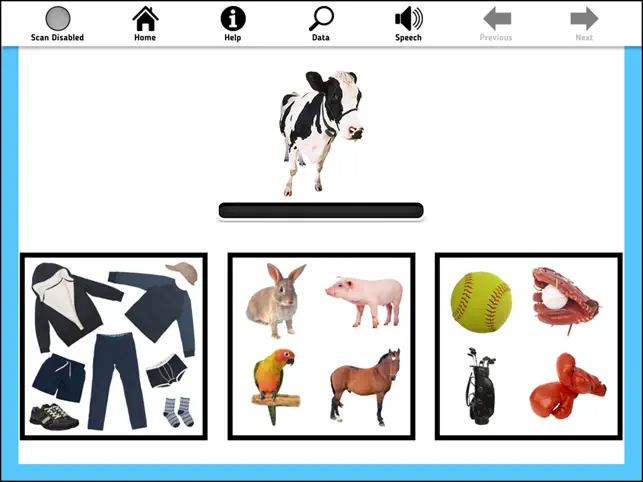 AAC Genie
$12.99 iOS app by Celeste Helling for high-tech AAC assessments
AAC Genie
$12.99 iOS app by Celeste Helling for high-tech AAC assessments
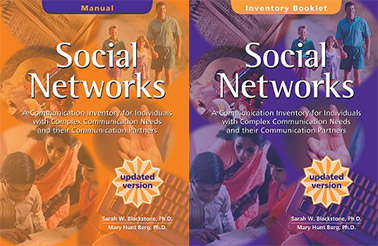 Social Networks
$89 printed packet by ACI for assessing communication environments and intervention planning
Social Networks
$89 printed packet by ACI for assessing communication environments and intervention planning
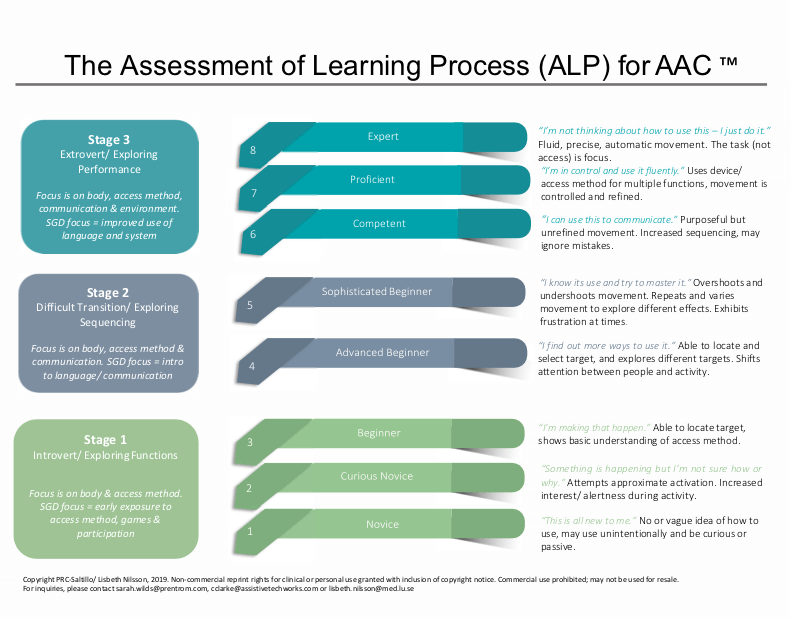 ALP for AAC
Free - Assessment of Learning Process online tool by PRC-Saltillo
ALP for AAC
Free - Assessment of Learning Process online tool by PRC-Saltillo
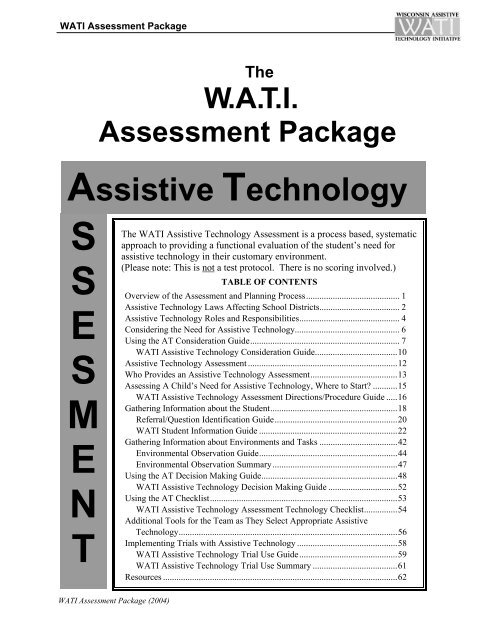 WATI
Free - Wisconsin Assistive Technology Initiative
WATI
Free - Wisconsin Assistive Technology Initiative
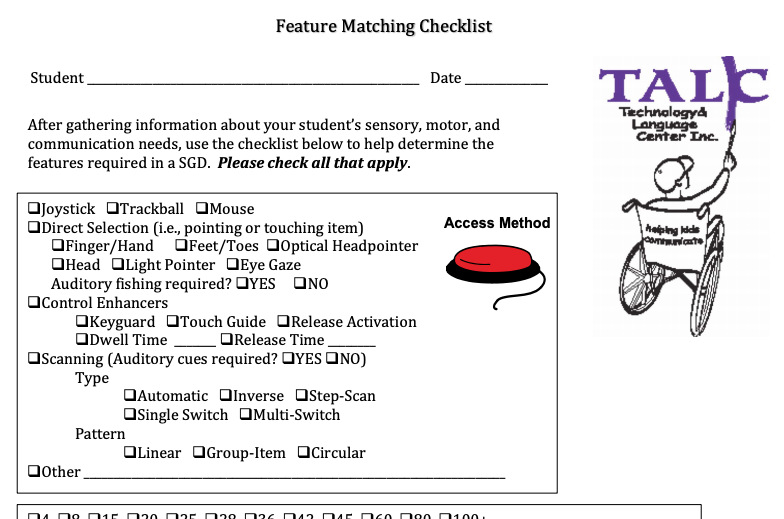 Feature Matching
Free after signup - checklist for assessing individualized technology requirements
Feature Matching
Free after signup - checklist for assessing individualized technology requirements
 AAC Profile
Paid packet - assess skills and design interventions with AAC
AAC Profile
Paid packet - assess skills and design interventions with AAC
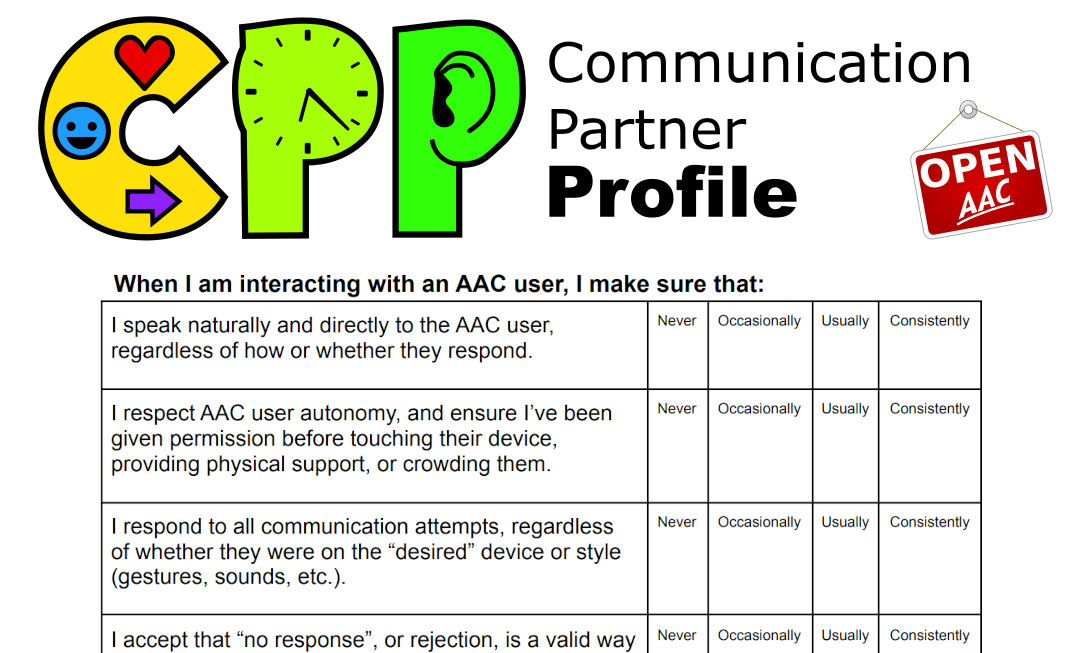 CPP
Free - self-evaluation Communication Partner Profile by OpenAAC
CPP
Free - self-evaluation Communication Partner Profile by OpenAAC
AAC Inclusion
It's also important to keep an eye on how we as an industry are doing at moving things forward. Below are the responses to questions asked this year about whether AAC users were included in decision-making, and what type of instruction has been observed.
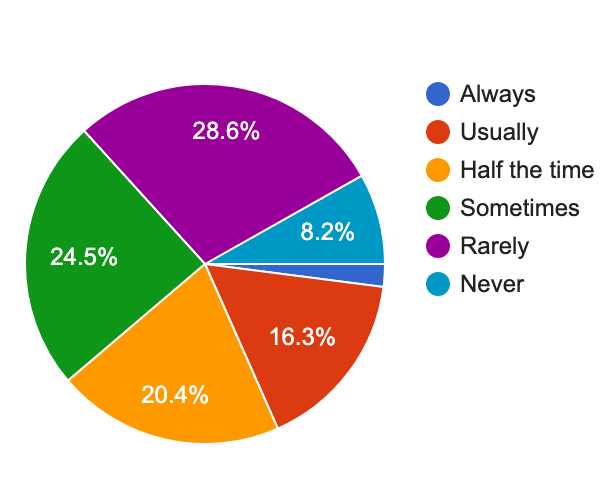
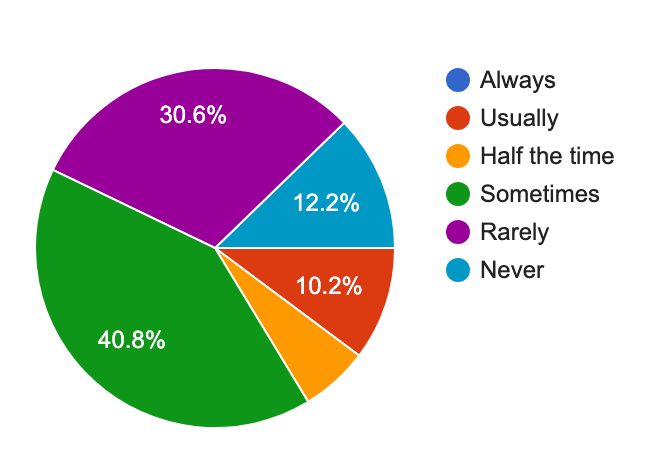
Decision-making is fundamental to autonomy, and it's important that AAC users are taught from an early age, just like anyone else, to make their own decisions. Too often people with disabilities find their range of decisions artificially limited by staff, policies or practices that do not treat them as capable individuals. We hope we can continue to make progress in this area.
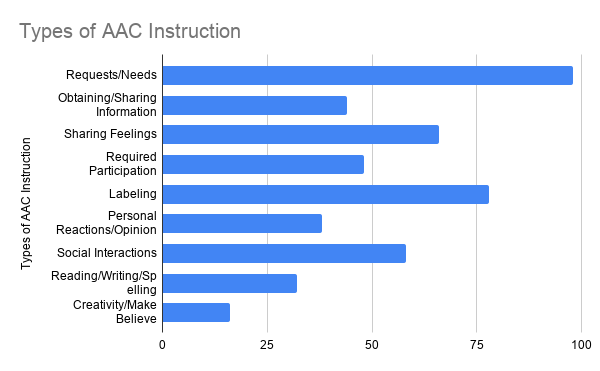
While some progress has happened in the variety of types of communicative instruction AAC users receive, we have room to improve in giving AAC users opportunities to express themselves in more abstract and autonomous ways.
Making the Grade
For the second year we are also posting the AAC Ecosystem GPA. This report, compiled from responses by community experts, shows that we still have some room for improvement, and highlights areas where we as a community may want to focus over the next year.
Full Year: 2025 (vs. 2024)
Overall GPA: 1.75 (1.9)
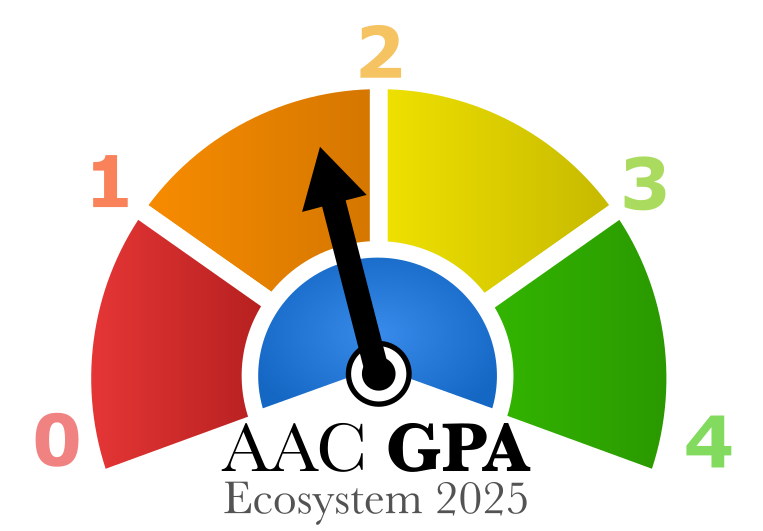
So... Maybe not the prettiest report card in the world. But it's definitely not a lost cause! Hopefully we can get some of those grades up by next year, and improve the health of the AAC ecosystem at large. We were happy to see higher marks for family supports and individualization, as those areas are probably some of the most pivotal to effective AAC implementation -- but getting an F for Education definitely stings. We'll dig more into these results in another post soon, so stay tuned!
Special Thanks
There are so many people who contribute to this annual report, and we want to give a big thank you to those named below, and to all the others who helped spread the word, shared their personal insights, or just did their small part behind the scenes to keep lifting us all up and help AAC make the most difference that it can for people all over the world. Thank you again, all of you!
Empower AAC | Angela Moorad, MS, CCC- SLP, OMazing Kids AAC Consulting | Jessica Hernandez | Krista Reeves | Kim Richards, Humble ISD | Christine Baudin, M.S., CCC-SLP, BCS-AAC | Marysville city schools | Kelsey Brewer, Alt+Shift | Kelly Fonner | Toby Scott | Heather Maydak, Westminster Technologies | Esmay Freihofer, Shoreline School District | Lindsey Fountain, Ottawa Area Intermediate School District | Candace Hayden, University of Texas at Austin | Kate Ahern | Katrina Vining, M.A., CCC-SLP | Cristina A. Peralta, Child’s Lead Speech and Language Therapy | NWACS | Jaime Lawson | Southwest Cook County Cooperative Association of Special Education | Jill Tullman & Associates
Thank You, Come Again!
We hope this State of AAC 2026 report will be useful to everyone! There's a lot in there, so feel free to take your time going through it. See if you can pick up some insights from others in the community! We also hope this can help drive the AAC ecosystem forward by giving us all some clear areas to work towards over the next year.
OpenAAC is a small non-profit with big dreams of increasing awareness, global access, and collaboration related to AAC. This report is only one part of the work that we do, you can learn a lot more across this web site. We are grateful for donations to help fund this work, and we would love to see you join us in our initiatives as well!
Help Us Grow!
OpenAAC needs donations like yours to expand our reach and continue to provide meaningful resources that will help everyone at every point on their AAC journey.