
The 2026 knAAC Awards
Keepers and Noteworthies in AAC
Voting is NOW OPEN! Click below to place your votes! (Nominee information below)
Welcome to the third annual knAAC Awards! Short for "Keepers and Noteworthies in AAC", the knAAC Awards are all about highlighting the wonderful work happening in the world of AAC! We want to help celebrate the unsung heroes of AAC who go above and beyond, not for fame or money, but because they see the impact it can make for underserved populations around the world.
All of these people and products have done impressive work, and we are grateful for how their contributions have helped AAC users. Our goal is not to run a popularity contest, but instead to try to bring attention to all of the nominees, and maybe have a little fun like a chilli cook-off or voting for our favorite superheroes.
Special thanks to Brandi Wentland for assistance with descriptions!
We rely on the donations of everyday folks in the AAC community in order to keep our work effective, strategic and unbiased. Please consider making a donation today to help us continue our work!
 Donate to
2026 knAAC Awards Categories
 AAC Advocate of the Year
Chris Klein
 Chris Klein is a lifelong AAC user, disability advocate, author, pastor, and founder of Device Verses. He has spent decades advocating for the inclusion and full participation of people who use AAC. His current work developing free, open-source AAC and light-tech resources for faith-based settings addresses an important area of community access that is often overlooked.
Beth Moulam
 Beth Moulam has had a lifelong passion to empower augmentative and alternative communication (AAC) users to fulfil their own communication potential. As an advocate Beth draws on both her own lived experience of using AAC and assistive technology on a daily basis for nearly 30 years, combining this with post-graduate research skills in social policy. She has a Master of Research (Distinction) in social policy from the University of York, this focused on the effectiveness of policy and provision of AAC for children in England. Beth volunteers as a Trustee with Communication Matters; the UK Chapter of ISAAC, and is Patron of 1 Voice; a UK charity for young AAC users and their families. In 2024 Beth was awarded by Manchester Metropolitan University an honorary PhD for her advocacy work and as a Paralympian, having represented Great Britain in the sport of boccia at Tokyo 2020. In 2024 she was also nominated on the Disability Power 100 list (top UK disabled influencers) as the UK’s Number 1 Grassroots and Community advocate.
Randi Brown
 Randi Brown is an SLP, AAC specialist, and lead SLP and Product Innovator for VoiceBridge AAC. In her work in Azle ISD, she has helped expand access to AAC for students with complex communication needs while supporting teachers and staff in increasing language exposure and AAC use throughout the school day.
The endever* corbin
et al polycule
 endever* corbin, their partner, and their partner's partner are raising their baby in a trilingual (English, Russian, ASL), AAC-using household. The baby has had access to multimodal AAC since birth and has already communicated their first message using AAC.
 AAC Teen Self-Advocate of the Year
Tristan
Tristan is an AAC user and emerging self-advocate who shares his experiences and perspectives as a nonspeaking autistic teen. Through AAC community groups, publications, and ImpAACt Voices, Tristan has spoken about communication, connection, self-advocacy, and choosing his own goals.LJ
LJ is a dedicated teen advocate who uses AAC to promote inclusion, accessibility, and greater understanding of the experiences of students with disabilities. He has presented at national conferences including ATIA and ASHA, and serves as a PRC-Saltillo Ambassador advocating for greater representation of AAC users.Sirish
As a high school student, Sirish has taken the initiative to advocate for students with complex communication needs by designing and creating core communication boards for special education classrooms, including placemats that support communication during mealtimes. AAC Presenter of the Year
Lance McLemore
 Lance McLemore brings the essential perspective of an AAC user to professional education. Through presentations, keynotes, and research collaborations, he challenges assumptions about communication and disability while addressing self-determination, relationships, community participation, and communication access.
Brenda Del Monte
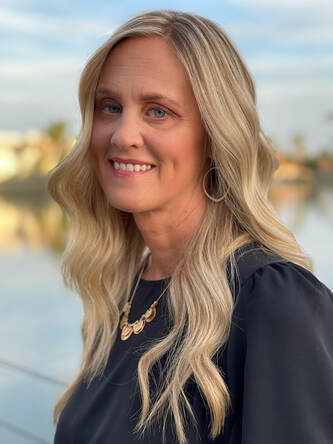
Brenda Robertson Del Monte is a Speech Language Pathologist and an assistive technology evaluator and facilitator, who has worked with people with disabilities for over 20 years.
Her passion has been working with people who are not functionally verbal and use communication devices to help them communicate. She specializes in working with those with complicated bodies who have limited ways to access augmentative and alternative communication (AAC). She currently speaks globally on AI & AAC.
Chris Bugaj

Christopher R. Bugaj, MA CCC‐SLP is a founding member of the Assistive Technology Team for Loudoun County Public Schools. Chris co-hosts the Talking With Tech podcast featuring interviews and conversations about augmentative and alternative communication and has hosted The A.T.TIPSCAST; a multi‐award winning podcast featuring strategies to design educational experiences. Chris is the author of The New Assistive Tech: Make Learning Awesome For All, published by the International Society for Technology in Education (ISTE). Chris is the co-author of Inclusive Learning 365: EdTech Strategies for Every Day of the Year and The Practical (and Fun) Guide to Assistive Technology in Public Schools both of which are also published by ISTE. Chris co-authored two chapters for a book published by Brookes Publishing titled Technology Tools for Students with Autism. Chris co‐produces and co‐authors the popular Night Light Stories podcast which features original stories for children of all ages. Chris has presented over 550 live or digital sessions at local, regional, state, national and international events, including TEDx.
Rachel Madel
 Rachel Madel is a Los Angeles-based speech-language pathologist dedicated to coaching parents and professionals on the use of technology to support communication. Rachel presents both nationally and abroad on using technology and augmentative alternative communication (AAC) to support language development in children with a variety of diagnoses. She owns a private practice in Los Angeles, California where she specializes in the assessment and treatment of children who are using AAC. Her work has been featured in Autism Parenting Magazine, Speech Science, Praactical AAC, Xceptional Ed, Teachers with Apps and ChildNEXUS. She is the founder of a digital media company that provides educational resources, therapy materials and training videos to help support parents and professionals of children with with complex communication needs.
Rachael Langley
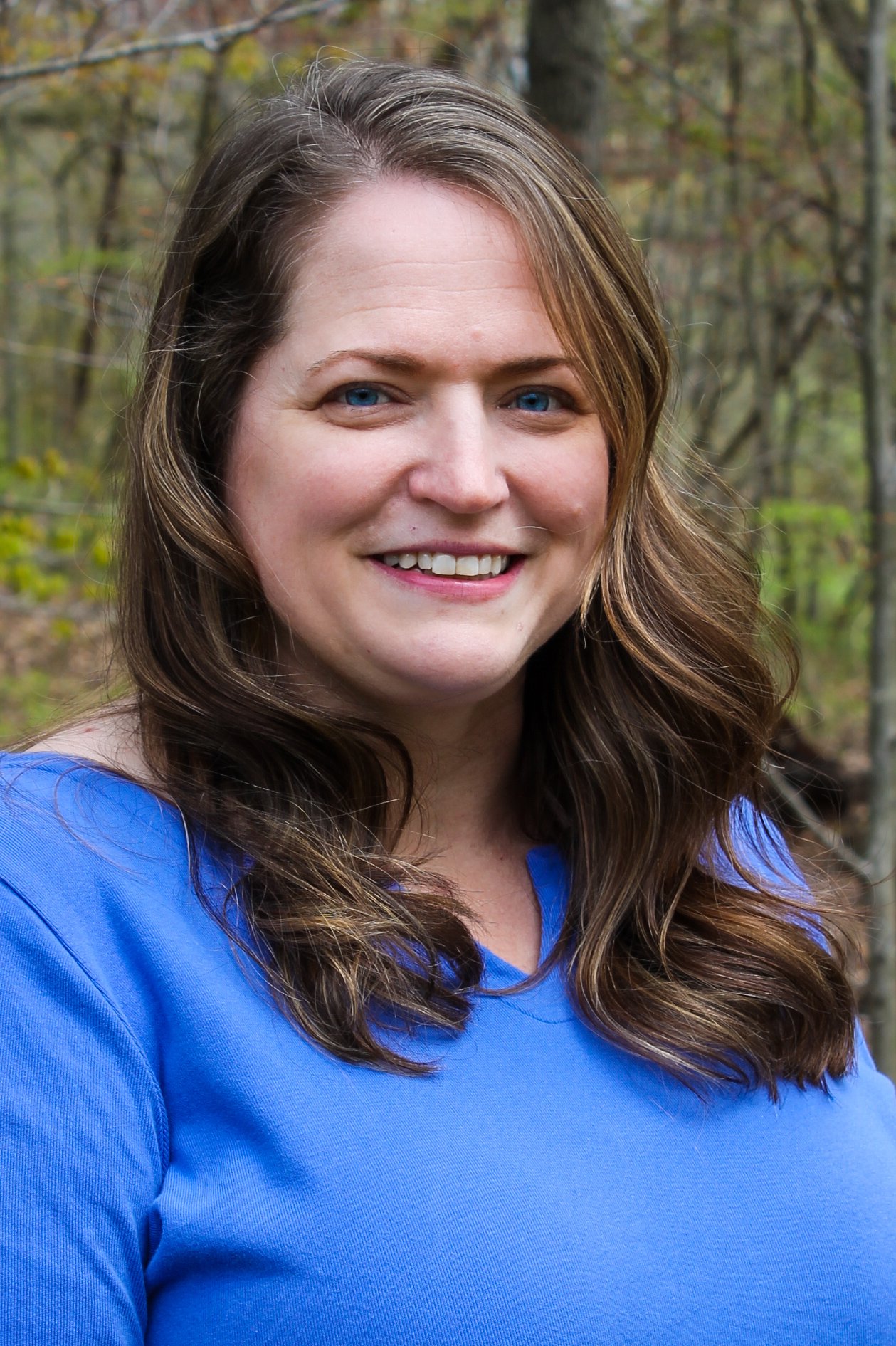 Rachael Langley is a speech-language pathologist working as an Augmentative/Alternative Communication (AAC) Consultant in Michigan. Her 20-year career has focused primarily on supporting students with complex communication needs. Rachael is one of the founders and organizers of #TalkingAAC, a conference focused specifically on AAC learning. Rachael has presented at local, state, and national conferences in the United States. She enjoys creating graphics and other materials related to AAC implementation.
 AAC Researcher of the Year
Lori Geist
 Lori Geist's research focuses on improving communication, language, literacy, and academic outcomes for individuals with complex communication needs. Her work has examined AAC-mediated classroom participation, receptive vocabulary instruction, and the use of technology to support effective AAC intervention, including federally funded projects such as Project Converse, Building Bridges, and Project Open.
Sofia Benson-Goldberg,
PhD
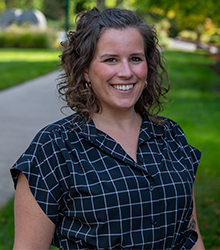 Dr. Benson-Goldberg's research advances important areas of AAC, including literacy, multimodal communication, access, and inclusive technology design. Her innovative work has used eye-tracking to explore literacy abilities and incorporated AAC users into technology design and evaluation.
Janice Light
 Janice is an American academic who held the Hintz Family Endowed Chair in Children's Communicative Competence in the Department of Communication Sciences and Disorders at Pennsylvania State University. As a Distinguished Professor, she taught graduate courses and seminars in augmentative and alternative communication (AAC) and developed an internationally recognized research program in AAC.
Alyssa Hillary Zisk
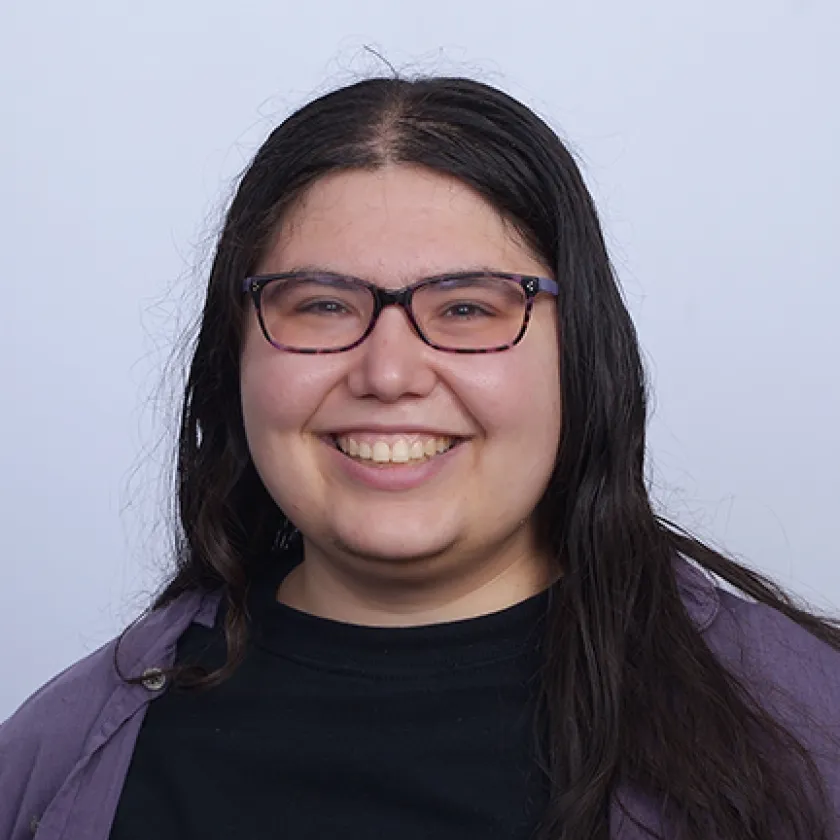 Alyssa is an Autistic part-time AAC user, using a variety of text-based tools. They are the AAC Research team lead at AssistiveWare, conducting AAC research both related and unrelated to their own AAC use and needs. Alyssa completed their PhD in neuroscience in May 2021, working on brain-computer interfaces for people with ALS. They are also one of the moderators of the Facebook group, Ask Me, I'm an AAC User, which earned a Service to the Self-Advocacy Movement Award from the Autistic Self-Advocacy Network in 2021.
 AAC Community Leader of the Year
Chris Klein
Chris Klein has spent years building spaces where AAC users can connect, develop relationships, and become leaders within their community. Through ImpAACt Voices, AAC Hangouts, in-person events, and Device Verses, he has created opportunities for AAC users to meet peers, share experiences, and develop meaningful connections.
Amanda Hartmann
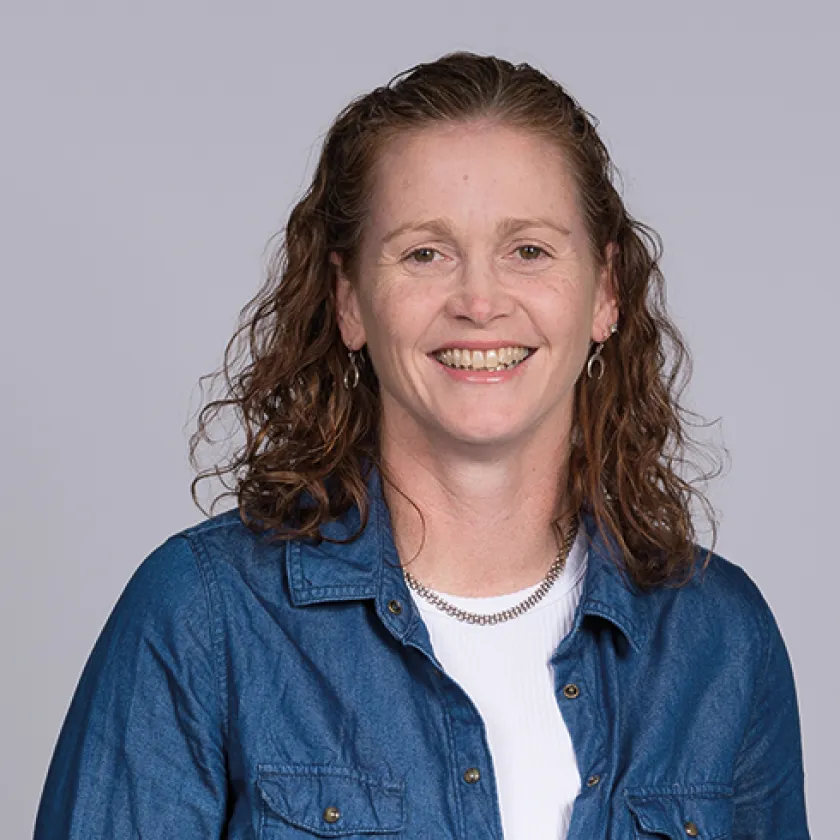 Amanda Hartmann has been a Speech-Language Pathologist and an AAC enthusiast for over 25 years. She has helped many children who use AAC and the people that support them. She is passionate about connecting with and advocating for people who use AAC.
Caroline Gaddy
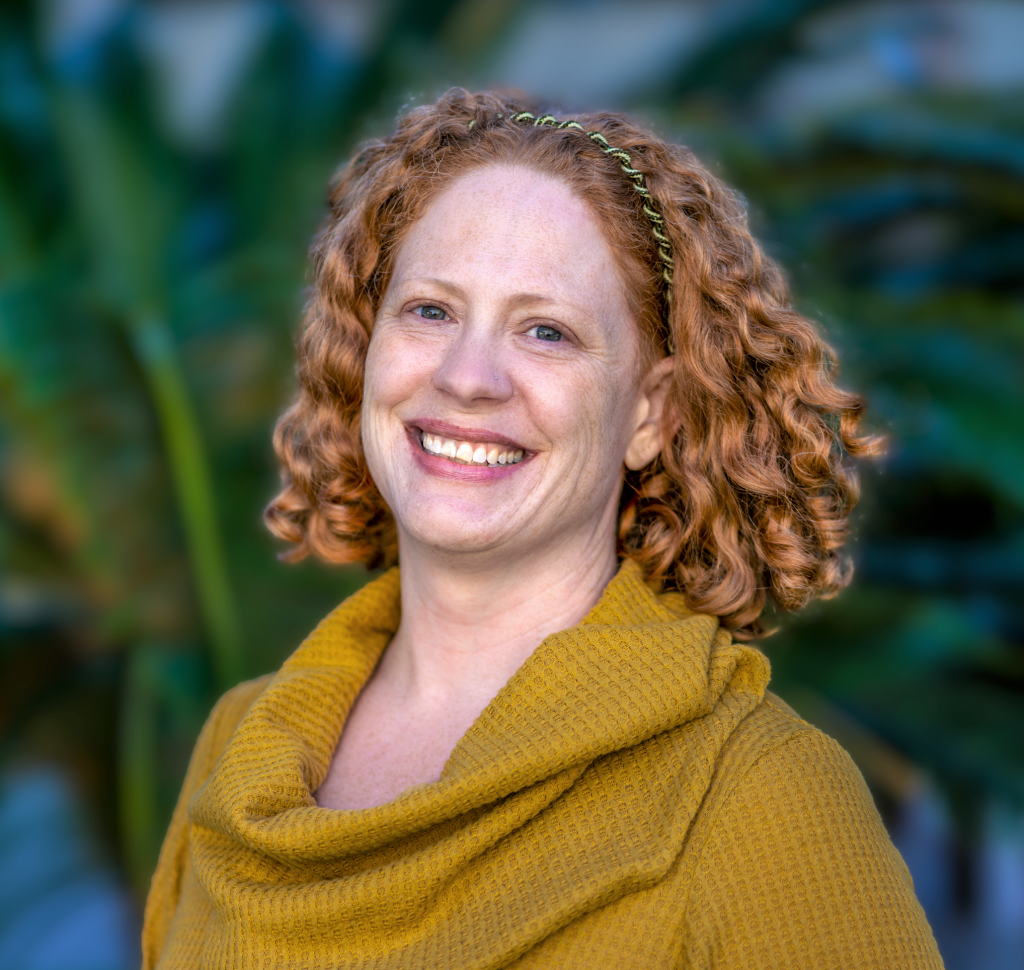 Caroline Gaddy, MFA, MA, CCC-SLP (they/she) is a speech-language pathologist, AAC specialist, disability advocate, and neurodiversity educator. They are a Learning Consultant for Tobii Dynavox and also provide education and consultation on neurodiversity-affirming practices through their business, Vibrant Minds, LLC. Caroline worked for many years in school settings as a teacher and an SLP, and also worked in medical settings with adult and pediatric populations, often specializing in supporting communication access for people with multiple disabilities. They have presented at both state and national conferences and coauthored articles on neuro-affirming practices, AAC, and Autistic communication styles.
 Symbol-Centric AAC App of the Year
Global Symbols
 Global Symbols is expanding access to culturally and linguistically responsive AAC symbols. Its work recognizes that symbols are not culturally neutral and supports resources that better represent users' languages, cultures, communities, and everyday experiences, including exploration of AI-supported symbol generation.
Avaz
 Avaz continues to grow its symbol-based vocabulary and features based on ongoing feedback from AAC users and professionals.
Grid 3
 SmartBox's Grid 3 remains a widely used, feature-rich AAC and computer access software package from Smartbox, supporting symbol- and text-based communication alike.
LAMP 3
 LAMP Words for Life 3 builds on the established LAMP motor-planning approach to vocabulary organization, helping AAC users build consistent, automatic access to language.
Proloquo
 Proloquo is AssistiveWare's comprehensive AAC app for iPad and iPhone, designed to grow with users from their first words through adulthood. It pairs an extensive, research-based vocabulary with features like Thinking Space for visualizing and organizing thoughts and Focus Mode for guiding attention without limiting access to vocabulary.
TouchChat HD
 TouchChat HD is a symbol-based AAC app from PRC-Saltillo offering customizable vocabulary and robust language development features for a wide range of AAC users.
 Text-Centric AAC App of the Year
Speech Assistant AAC
Speech Assistant AAC is one of the most robustly featured text-based AAC apps for the cost, rivaling major TTS apps in communication efficiency features. It includes an ElevenLabs personal voice clone integration for phone calls, and its developer is extremely responsive to feedback and bug fixes.Predictable
 Predictable provides a robust communication system for AAC users who generate their own messages through text. Features such as word and phrase prediction, personalized vocabulary, saved phrases, and text-to-speech preserve the user's ability to determine exactly what they want to say.
Dialogue AAC
 Dialogue AAC is a text-based communication app designed to support efficient, personalized messaging for AAC users who communicate through text.
Proloquo4Text
 Proloquo4Text is AssistiveWare's text-based AAC app, offering word prediction and efficient message composition for AAC users who communicate through text.
 Up-And-Coming AAC App of the Year
Avaz
Avaz is an established AAC app that continues to evolve and deserves greater recognition. Its newer Step Up vocabulary and the team's responsiveness to feedback from AAC users and professionals stand out, continuing to listen, collaborate, and make meaningful improvements.
VoiceBridge AAC
 VoiceBridge is an exciting new AAC app created with language development and real-world AAC use in mind. It offers robust vocabulary and includes features that help support language development and track how AAC users communicate across different modalities.
Bravo
 Bravo is an open source, cross-platform, free AI powered communication application that can be used with direct selection and with auditory scanning.
Fast AAC
 Fast AAC does a lot of heavy lifting for the community, utilizing AI not to replace clinical and community knowledge but to create a cheaper product that is worthwhile.
Flexspeak AAC
 FlexSpeak supports bilingual communication, letting AAC users switch languages within a single message.
TypingTalk AAC
TypingTalk AAC is a text-based communication app nominated by the community this year.AbilityMic
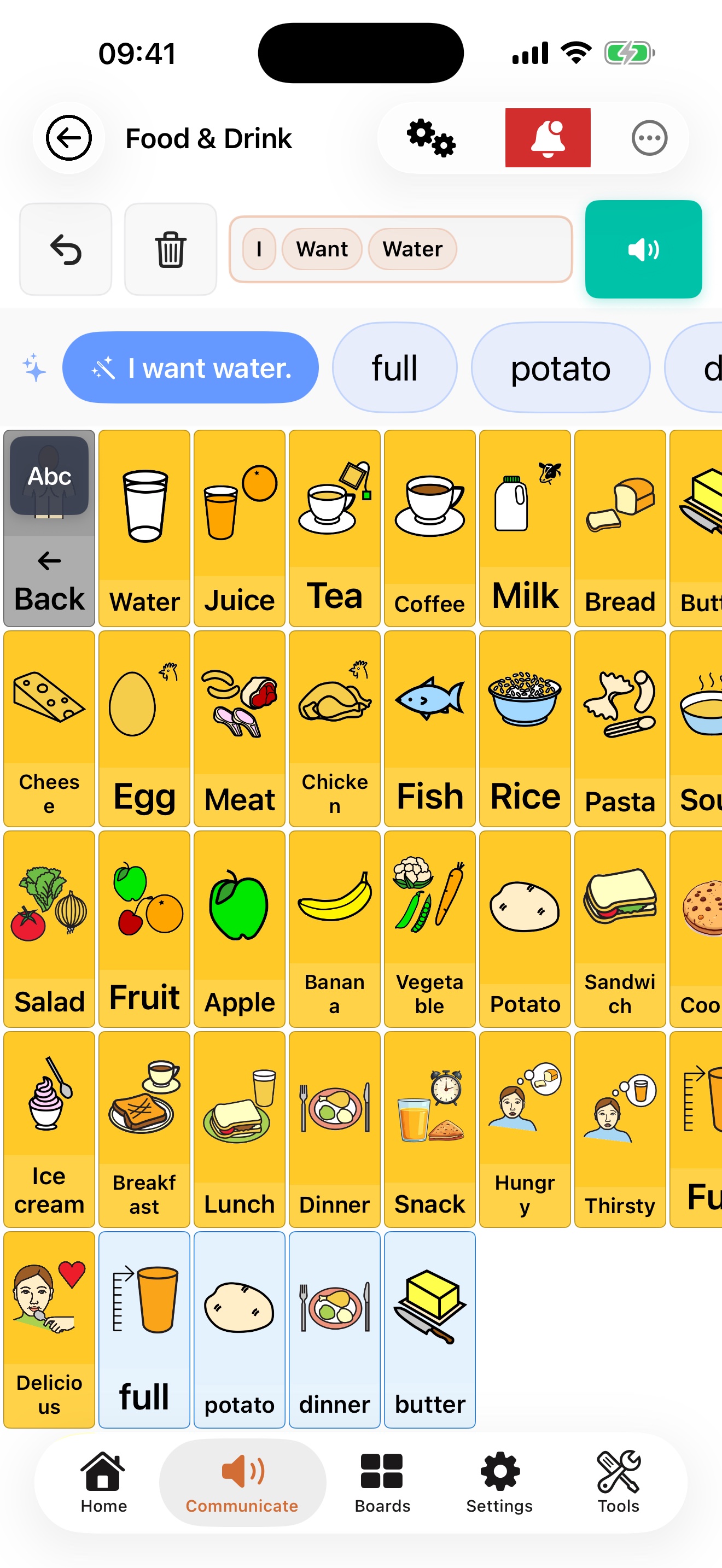 AbilityMic is a new symbol- and text-based AAC app from Poland, developed with AAC specialist and speech therapist Elżbieta Dawidek, that keeps the AAC user in control. It runs fully offline across Apple devices, Windows, Linux, and the browser (with Android in testing), and includes accessibility options like switch scanning, dwell activation, and VoiceOver support built to WCAG 2.2 AA. Optional on-device AI can turn a few tiles into a natural sentence, but only ever as a suggestion the user can accept, edit, or ignore, and a web panel lets SLPs and families build and sync boards remotely by invite.
 Best New AAC Feature
Bridging Voice's iOS
Mirroring & Control
 The Bridging Voice tech team has developed technology for individuals who use Windows-based Speech Generating Devices to mirror their iPhone or iPad screens onto their SGD and control it using their access method, giving back full function and control of their iOS-based devices.
VoiceBridge's language
sampling feature
VoiceBridge includes built-in language sampling that documents multimodal communication and generates useful language measures, along with interactive picture scenes that give AAC users engaging opportunities to explore vocabulary and build language.
AI Translation
Recognizing the innovative ways developers are supporting multilingual communication: PRC-Saltillo offers message translation, CoughDrop supports page-level translation, Cboard incorporates translation across menus, and FlexSpeak supports bilingual communication and language switching within a message.Smartbox's Smart Prompt
Smart Prompt is one of Smartbox's newer AI-assisted additions to the Grid 3 platform, aimed at helping AAC users generate messages more quickly.
Smartbox's AI Features
Nominators praised Smartbox's thoughtful integration of AI features into the Grid 3 experience this year.
 AAC User Community of the Year
Out & About
For more than 25 years, Out & About has created opportunities for AAC users to build friendships, communicate, and participate together in real community settings, welcoming AAC users across ages, abilities, devices, and language systems. Now supported by The Nika Project, it continues to grow while remaining centered on friendship, belonging, and AAC-user leadership.USSAAC's AAC-user
social meetups
 USSAAC's AAC User Social Meetups create accessible opportunities for AAC users to connect, socialize, and build friendships outside of therapy. Virtual meetups remove geographic barriers, while activities such as AAC Family Game Nights create relaxed spaces for AAC users and families to connect
Ask me, I'm an
AAC User
Ask me, I'm an AAC User is a facebook group where SLP professionals and others can seek the expertise of actual AAC users.
 AAC Supporter Community of the Year
QIAT
 The QIAT Community is a nationwide grassroots group that includes hundreds of individuals who provide input into the ongoing process of identifying, disseminating, and implementing a set of widely applicable Quality Indicators for Assistive Technology Services in school settings
AAC for the SLP
A supportive facebook group for those who work with and evaluate individuals for AAC.Weave Chat AAC
Community
The Weave Chat AAC community page is a safe and inclusive space to share ideas, ask questions, and make suggestions.
This group was created for the purpose of uniting users of AAC, especially those who use Weave Chat AAC - whether it be the app version, the lite-tech versions, or any combination there of.
Users come from all areas of the world. It is imperative that we aall remain respectful of each other’s backgrounds and ideas. This group is intended to be a space where you feel safe enough to share ideas, ask questions, and make suggestions
AAC and Literacy
AAC and Literacy is a community resource focused on supporting literacy development for AAC users. AAC Content Creator of the Year
@communicationspot
Helping SLPs create engaging, sensory-rich therapy that builds communication, connection & confidence.@spinsandstomps on Instagram
@spinsandstomps is ran by Erin, a mother of an AAC user. Erin documents her family's day-to-day AAC and gestalt language processing journey, sharing how her daughter uses an AAC device alongside a total communication approach.Brooke Eby
 Brooke Eby unfortunately recently passed away at only 37 years old due to complications with ALS, but she accomplished so much in the short time that she had to do so. Brooke was a social media influencer and ALS advocate for the entire 4 years that she lived with this disease. She created and shared a magnitude of content related to AAC and ALS during this time, building up hundreds of thousands of followers across TikTok, Instagram, Facebook, and LinkedIn. In 2023, Brooke founded ALStogether, an online Slack community connecting people with ALS and caregivers, including a channel dedicated specifically to AAC discussions, connections, and resources. Her blogs, social media posts, and more will continue to help other AAC users and potential users for many years to come.
Maria De Leon, M.S., CCC-SLP, BCS-AAC
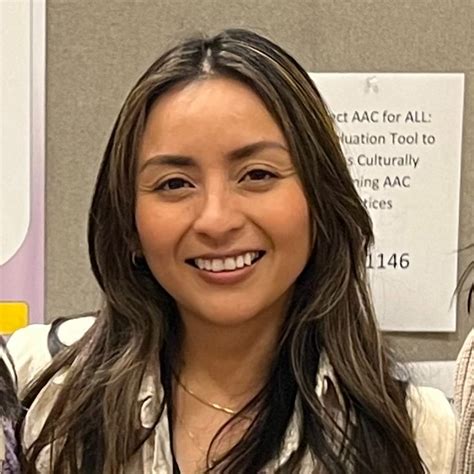 Maria De Leon creates exceptional content focused on bilingual, multilingual, and culturally responsive AAC practice. Through VocesAAC, BilingüeAAC, @mariadeleonslp, presentations, and trainings, she translates research and complex AAC concepts into practical information clinicians and families can use. Her work encourages professionals to look beyond simply translating vocabulary and consider how language, culture, family perspectives, and lived experiences should shape AAC assessment and intervention.
 AAC Training Resource of the Year
Stepping Into AAC
 Stepping into AAC provides families and communication partners with a practical, approachable way to learn how to support AAC. Rather than overwhelming families with terminology, it breaks AAC implementation into manageable steps and everyday activities. The freely available materials address modeling, communication opportunities, responding to different forms of communication, and supporting participation. It bridges the gap between receiving an AAC system and knowing how to support meaningful communication and language development in daily life.
Bridging Voice
Trainings
Bridging Voice hosts free, monthly live trainings on AAC that are open to anyone, including clients, families, caregivers, and professionals. Professionals can earn a Professional Development Certificate for attending live, and every session is recorded and posted to the Bridging Voice website and YouTube channel for free, on-demand access.
AAC Learning Journey
 AAC Learning Journey offers comprehensive, practical training for professionals supporting individuals who use AAC, including self-paced e-learning and instructor-led courses on AAC implementation, device and app programming, access methods, literacy, and communication partner support. Many courses are free, and several offer ASHA CEUs or certificates of attendance.
AbleU
 AbleU is AbleNet's platform offering accessible, self-paced training resources for educators and support staff working with AAC and assistive technology.
 AAC Community Site of the Year
OMazing Kids
AAC Consulting
 OMazing Kids AAC Consulting has become an invaluable reference hub for the AAC community. Angela Moorad consistently researches, tests, compares, and documents AAC apps, vocabulary systems, features, access options, and updates. She identifies meaningful differences and limitations rather than simply recommending favorite systems, helping clinicians, families, and supporters navigate an increasingly complex AAC landscape.
AACcessible
 AACcessible is a community resource nominated this year for supporting accessible AAC information and education.
Communication First
 CommunicationFIRST is a nonprofit organization led by people with speech-related disabilities, dedicated to protecting and advancing the communication rights of people with speech-related disabilities.
 Printable AAC Tool of the Year
LessonPix Grid Books
 LessonPix Grid Books provide a creative way to combine AAC, language, and literacy while maintaining access to communication vocabulary. They can be customized for individual users, interests, vocabulary, and instructional goals and incorporated into shared reading and interactive learning activities. LessonPix moves printable AAC beyond static communication boards, supporting commenting, answering questions, making choices, retelling, and other meaningful language interactions in an affordable, adaptable format.
Glint
 Glint offers printable templates that can be generated quickly using AI.
SymbolStix Prime
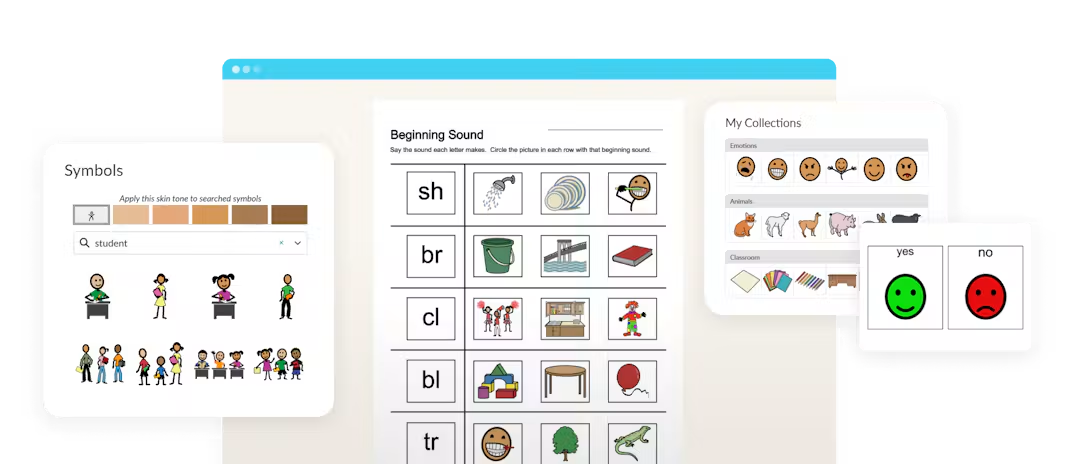 SymbolStix Prime is an AAC communication and authoring tool designed for students with disabilities or special educational needs.
With over 100,000 symbols, it gives students meaningful ways to understand, express themselves and take part in learning, building the foundations for a more neuroinclusive classroom.
Global Symbols
Global Symbols offers printable, culturally and linguistically responsive AAC symbols and resources for communities around the world.
Boardmaker
 Boardmaker is a longstanding symbol-based software platform used to create customized, printable AAC materials and communication boards.
 AAC Assessment Tool of the Year
DAGG-3
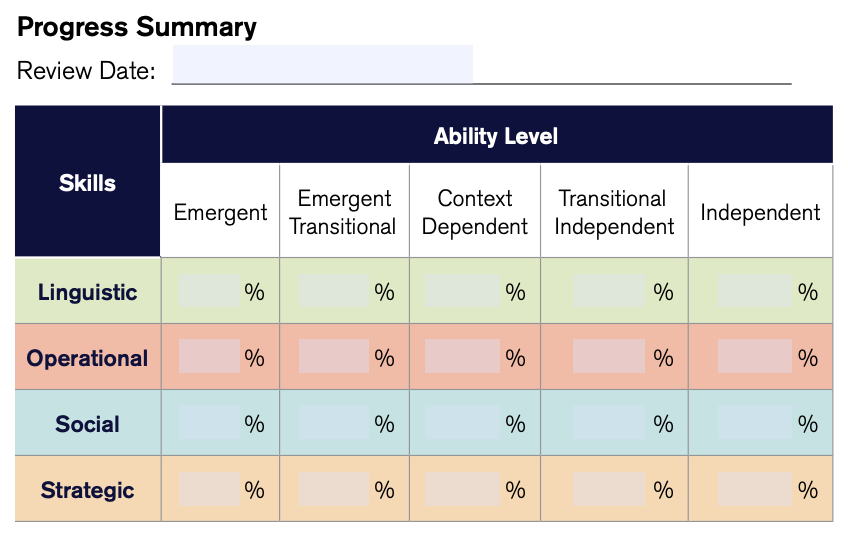 DAGG-3 provides a structured framework for assessing and supporting an individual’s development as an AAC communicator. DAGG-3 looks beyond device operation to consider broader areas of communicative competence and can help identify strengths, areas for growth, and meaningful intervention priorities. It is useful not only for assessment, but also for goal development and tracking progress over time, making it a practical tool for clinicians supporting AAC users.
Communication Matrix
 The Communication Matrix is an online assessment tool created to help professionals and family members support people with severe communication disorders in their journey toward greater self-expression. The Matrix guides you through a series of questions to answer based on your observations and experiences with the individual, and lets you track and understand progress at a glance.
Pragmatic Profile
for AAC Users
 The Pragmatic Profile for AAC Users is an assessment tool designed to evaluate the pragmatic and social communication skills of individuals who use AAC.
AAC Genie
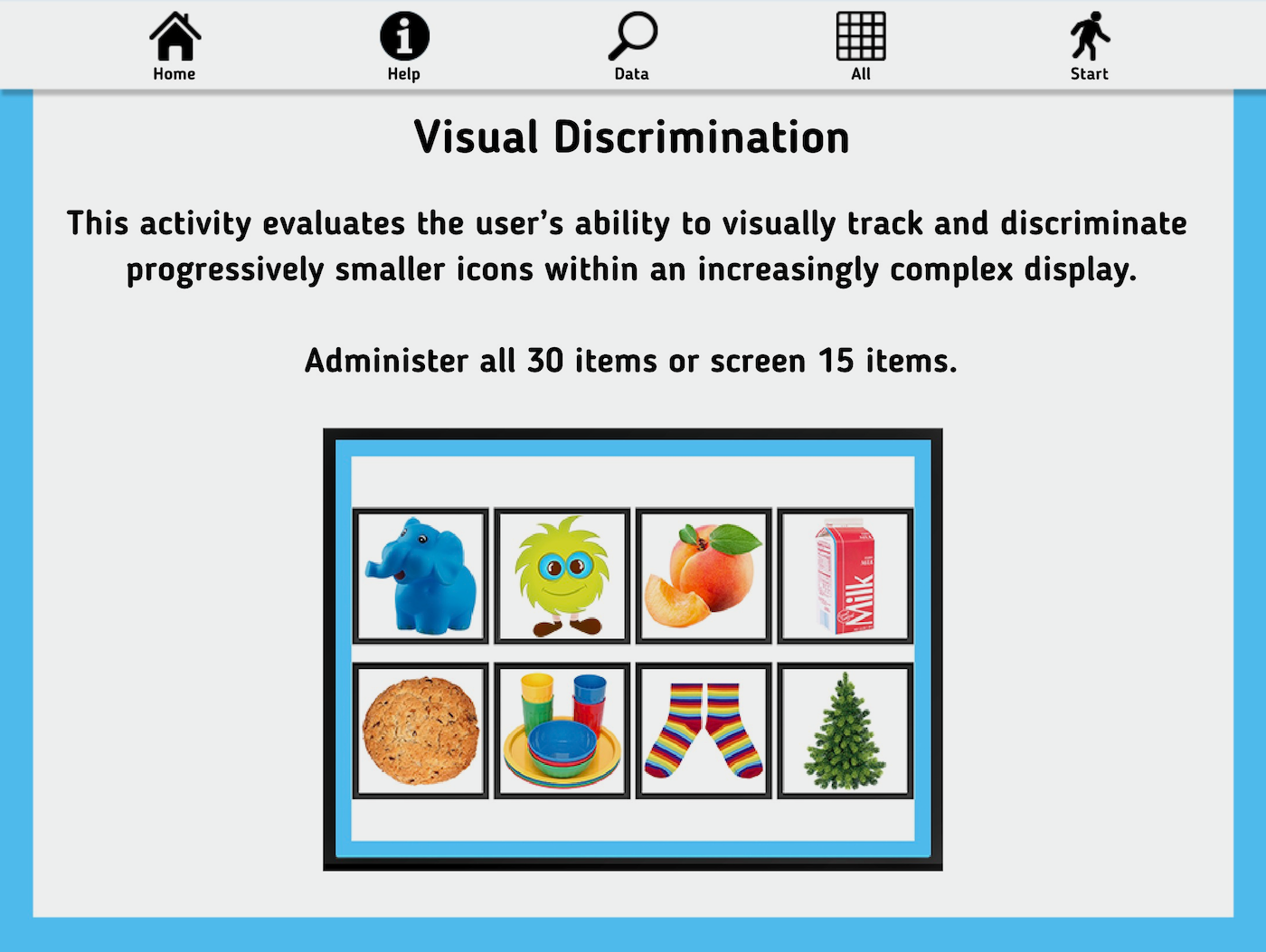 An informal augmentative and alternative communication (AAC) assessment app for speech-language pathologists, educators, and assistive technology teams planning further evaluation and device trials.
SETT
 The SETT Framework, developed by Joy Zabala, is a widely used framework for guiding AAC and assistive technology assessment by considering the Student, Environment, Tasks, and Tools.
 Lite-Tech AAC Product of the Year
AAC Adventures
by PRC-Saltillo
 AAC Adventures provides practical, engaging ways to bring AAC into everyday activities and experiences. Through themed adventures such as a day at the lake or a scavenger hunt, it encourages communication partners to model language and creates natural opportunities for AAC users to request, comment, and connect with others.
Hunter's Voice
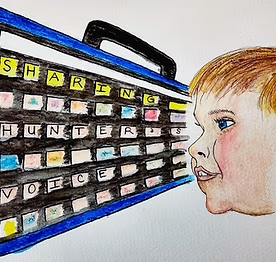 Hunter's Voice is a creative example of AAC innovation originating directly from an AAC user. When Hunter's device stopped working, he drew a QWERTY keyboard on paper and communicated by pointing to letters, eventually inspiring wearable keyboard options. This solution reinforces the importance of having multiple ways to communicate. It is simple, portable, and provides an alternative when electronics are unavailable or impractical—most importantly, it grew directly from an AAC user identifying what worked for him.
PRC-Saltillo's
Poster-size boards
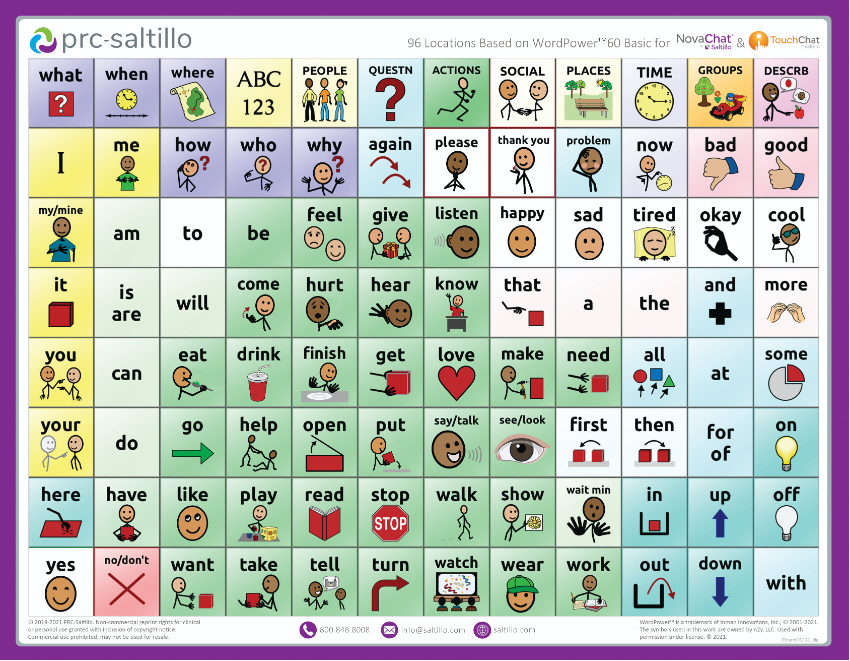 PRC-Saltillo's poster-size boards offer large-format, low-tech core vocabulary displays for classrooms and community spaces.
Flip Books by
PRC-Saltillo
 PRC-Saltillo's Flip Books offer a portable, low-tech way to access core and fringe vocabulary across different settings.
 Mid-Tech AAC Product of the Year
GoTalk Lite
Touch devices
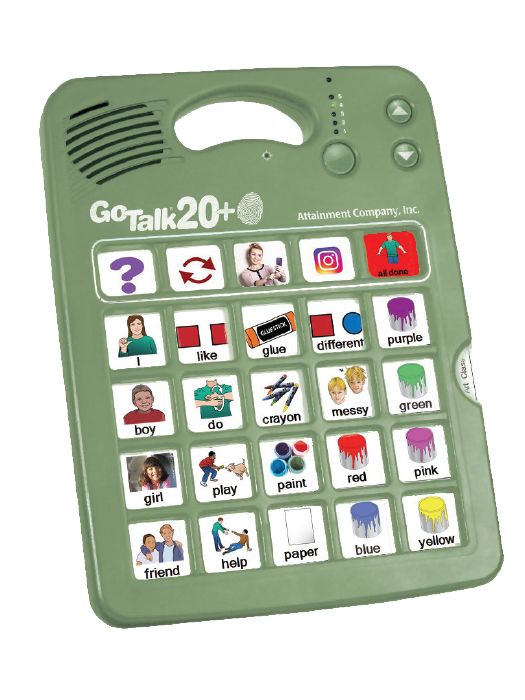 GoTalk Lite Touch devices offer simple, durable, light-tech voice output for direct, low-barrier communication.
TalkingBrix
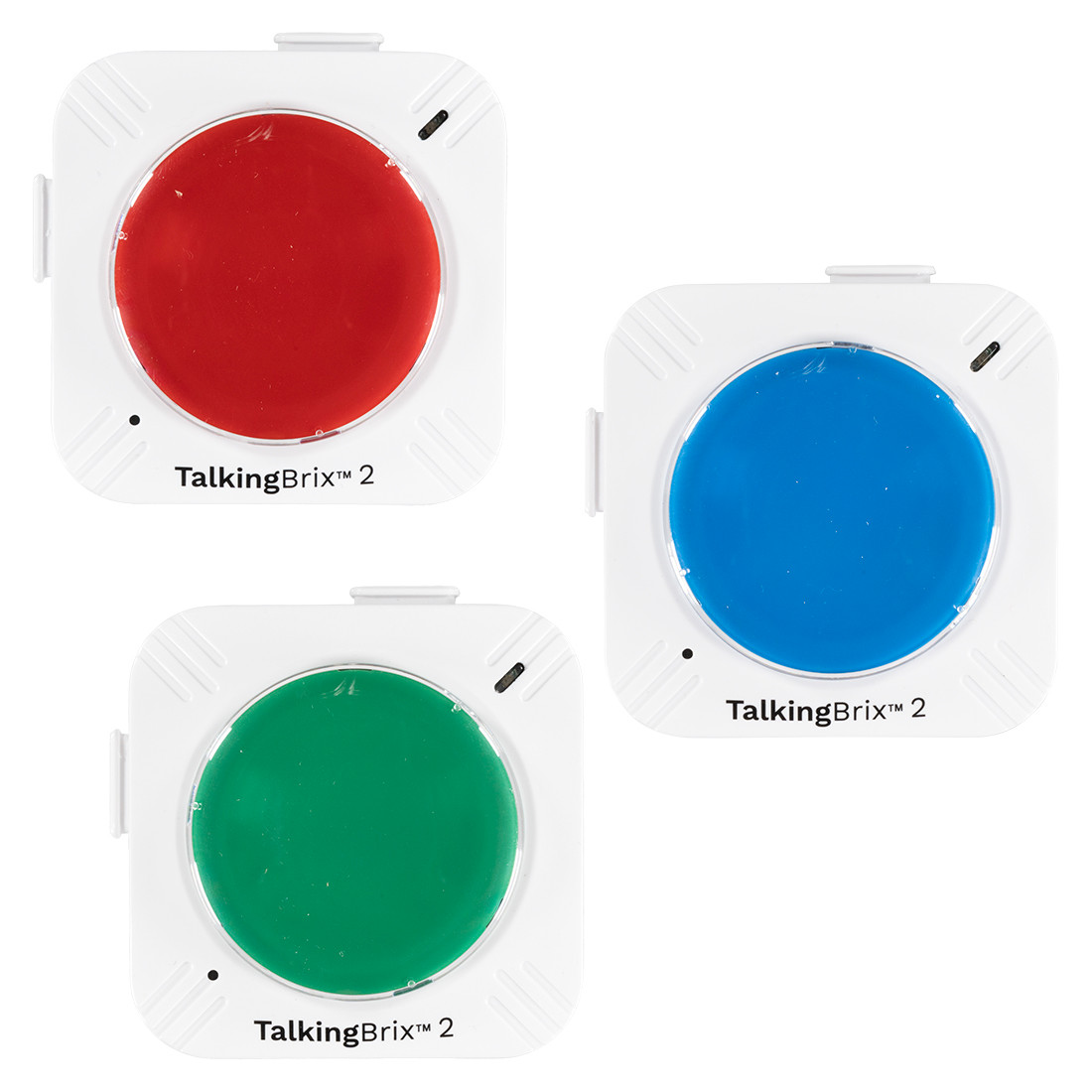 TalkingBrix is a modular, light-tech AAC product nominated by the community this year.
QuickTalker
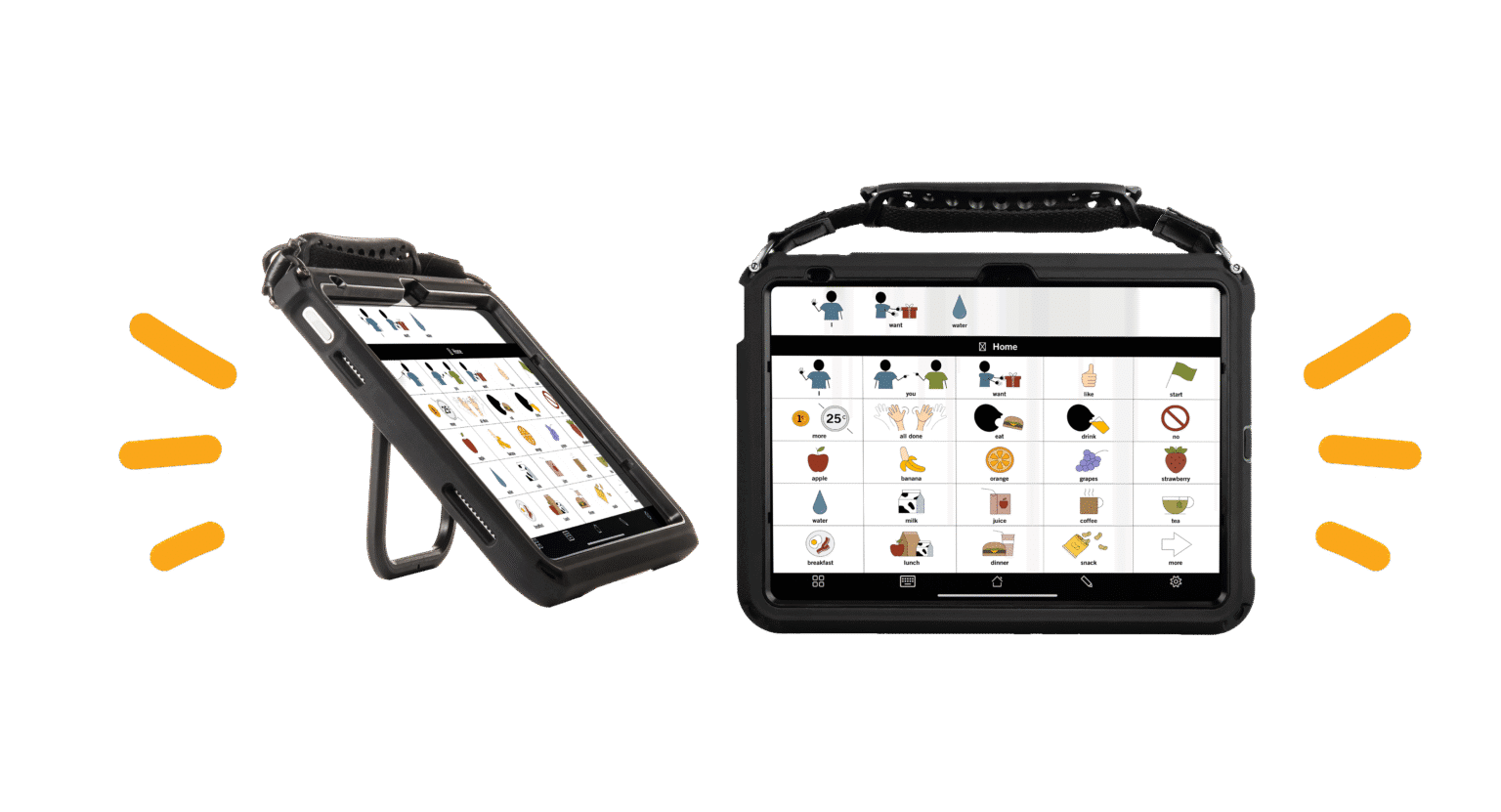 QuickTalker is a simple, durable voice-output communication device from Attainment Company, offering an accessible entry point into AAC.
ProxTalker
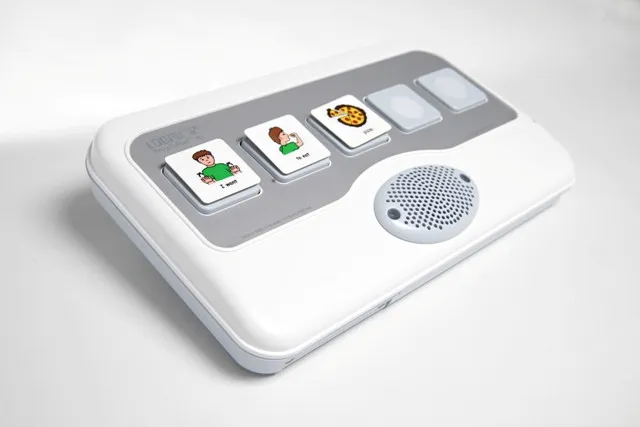 ProxTalker is a tactile AAC system that uses physical RFID symbol tokens to trigger spoken output when placed on the device.
</a>
 Alternative Access Product of the Year
Control Bionics Trilogy
 The NeuroNode Trilogy provides exceptional flexibility for AAC users with complex physical access needs by combining touch, eye gaze, and NeuroNode EMG/spatial control, reflecting the principle that technology should adapt to the individual rather than requiring a single access method.
Communication/Gesture
Dictionary
Honoring all communication is easier for communication partners if idiosyncratic gestures, body movements, and facial expressions are being ascribed meaning in the same manner across partners.
Kinderboard Keyboard
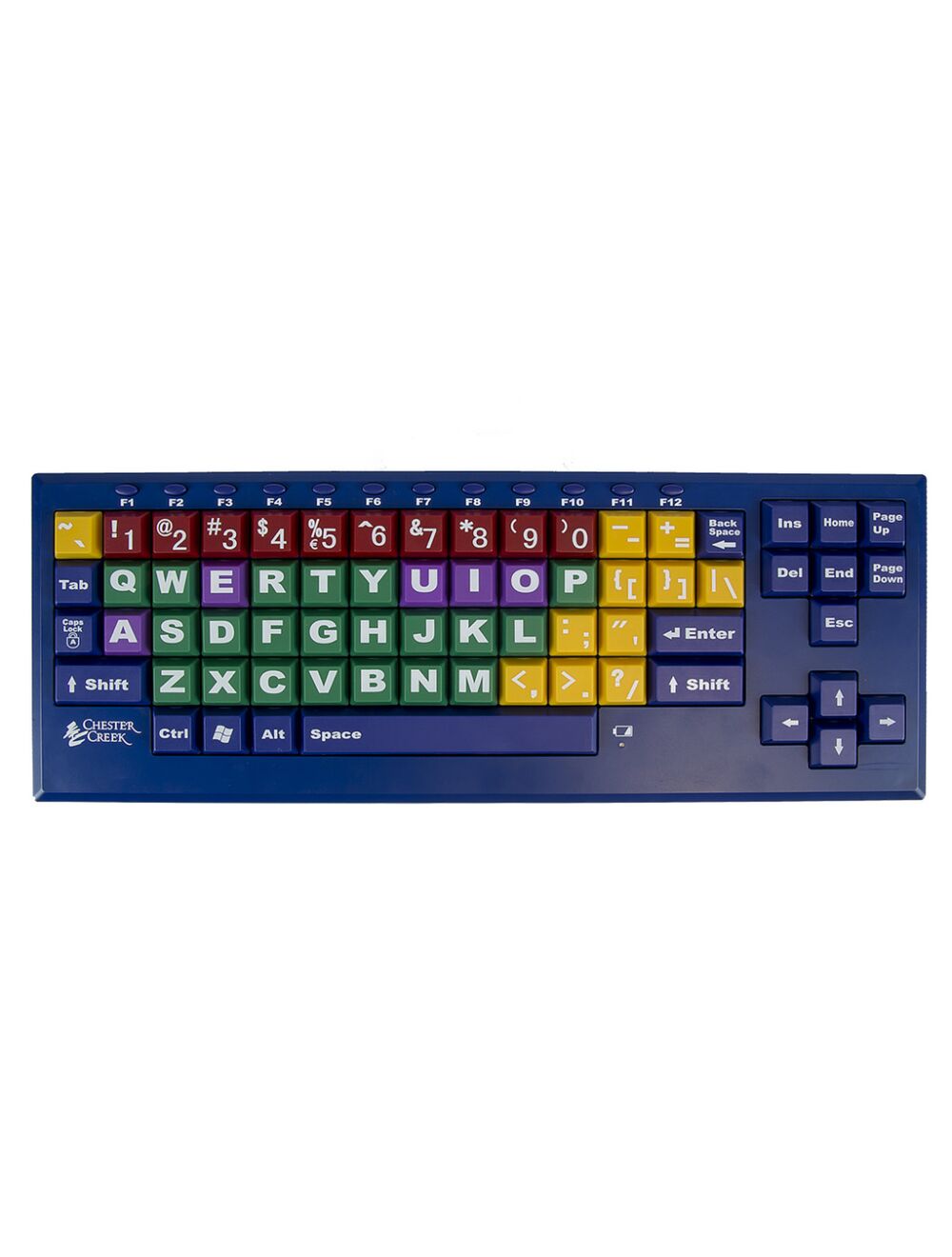 BigBlu KinderBoard is a large-key computer keyboard that can assist children with vision or motor-skill impairment, and is an excellent first keyboard for any child. Big Blu KinderBoard has big 1-in/2.5-cm oversized keys and large, bold, easy-to-read numbers and letters. The BigBlu KinderBoard features color-coded consonants, vowels, numbers and punctuation marks to help pre-school children learn their character sets
PODD auditory
only template
This template adapts the PODD communication system for AAC users who rely on auditory scanning rather than visual access.
 Symbol Library of the Year
Global Symbols
Global Symbols is expanding what symbol-based AAC can look like across languages, cultures, and communities, with a collaborative, open-access approach and exploration of AI-supported symbol generation offering exciting possibilities for greater personalization and representation.
PCS
 PCS (Picture Communication Symbols) is one of the most widely used AAC symbol sets, developed and maintained by Tobii Dynavox.
Open Symbols
 OpenSymbols is an open-access symbol library that aggregates multiple free and open symbol sets for use in AAC systems.
LessonPix
LessonPix is a customizable image library widely used to create personalized AAC materials, worksheets, and visual supports.
 AAC Vocabulary of the Year
WordPower
 WordPower continues to stand out because it is regularly updated to reflect the language and communication needs of AAC users. Recent updates have introduced features such as Next Logical Word, and it offers multiple vocabulary sizes and layouts combining high-frequency core vocabulary with fringe words and grammatical supports.
Avaz
Avaz's Step Up vocabulary has been nominated on account of both the strength of the vocabulary and the team's commitment to continued improvement, providing robust core and fringe vocabulary designed to support increasingly flexible, generative communication.
Proloquo
Proloquo's vocabulary is built on years of research and data from over 10,000 AAC users, supporting language growth from first words through adulthood while remaining easy to pick up and use right away.
GRID 3
GRID 3's vocabulary resources combine flexible grid-based page sets with built-in supports for literacy and language growth.
PODD
 PODD (Pragmatic Organisation Dynamic Display) is a well-established communication book and page-set system designed to support robust, flexible language use.
Voco Chat
 SmartBox's Voco Chat is a symbol vocabulary with a low-cell count, which enables users to communicate for a wide range of reasons. From saying what you want or asking a question, to telling someone about yourself or having a conversation.
Designed to make it easier to create messages, Voco Chat is built on a foundation of six message pathways. It also includes vocabulary to support individuals to participate more, engage in conversations, and be more independent, as well as talk about important topics such as mental health and wellbeing.
 Vendor AAC Blog of the Year
AssistiveWare
 The AssistiveWare Blog sets the standard for vendor AAC content. It goes well beyond product information, addressing communication autonomy, language development, AAC implementation, partner strategies, and common misconceptions. We value its commitment to centering AAC-user perspectives and making complex concepts accessible without oversimplifying them.
PrAACtical AAC
 PrAACtical AAC supports a community of professionals and families who are determined to improve the communication and literacy abilities of people with significant communication difficulties. It was founded in 2011 by two SLP professors, Carole Zangari and the late Robin Parker, around a shared passion for AAC.
 Lifetime Achievement (Judges' Selection)
Thank you for supporting the world of AAC! The knAAC Awards are one of the important projects we host as a non-profit in the AAC community. Please consider donating to help us continue funding this and other work to help lift everyone in the world of AAC!
</content>
Help Us Grow!
OpenAAC needs donations like yours to expand our reach and continue to provide meaningful resources that will help everyone at every point on their AAC journey.